Probation is a period of court-ordered supervision, often imposed instead of jail time. The person on probation must follow conditions the judge sets, usually while reporting to a probation officer. Breaking those rules can lead to incarceration, even though the original sentence never included it.
The conditions are not the same in every case. A judge tailors them to the offense and the person. Common requirements include staying employed, keeping a curfew, avoiding contact with victims or co-defendants, and submitting to drug or alcohol testing, according to the Wikipedia overview of probation.
This guide explains what those conditions typically cover, what happens when someone is accused of violating them, and how a probation term can end early. It is information about how the process works, not legal advice; anyone facing a violation allegation should speak with a lawyer.
What is probation, and how is it different from parole?
Probation is a sentence, or part of one, served in the community under supervision. In some jurisdictions the word covers only community sentences, such as a suspended sentence. In others it also includes supervision of people conditionally released from prison, which is where the confusion with parole begins, per the same overview.
Parole, by contrast, follows a period of incarceration. As criminal defense attorney Julie Rendelman explains in her guide to how probation works in New York, the two terms are often mixed up: parole means serving part of a sentence in the community after time in prison, while probation is usually an alternative to that prison time in the first place.
Courts tend to grant probation when a person does not appear to pose a public risk and could benefit from the structure, the New York guide notes. That structure is the point. The conditions exist to keep the person accountable without a jail cell.
What conditions do courts typically impose?
The standard conditions apply to nearly everyone. A probationer is ordinarily required to maintain law-abiding behavior and obey the orders of the probation officer. Courts may also order someone to stay employed or in an educational program, remain within the jurisdiction, live at a directed place, or stay away from firearms, according to the Wikipedia entry.
Offense-specific conditions add a second layer. Someone convicted of a domestic violence offense may be barred from contacting a former partner. In cases involving child sexual abuse, the conditions may prohibit contact with minors. Contact with known criminals, particularly co-defendants, is another common prohibition.
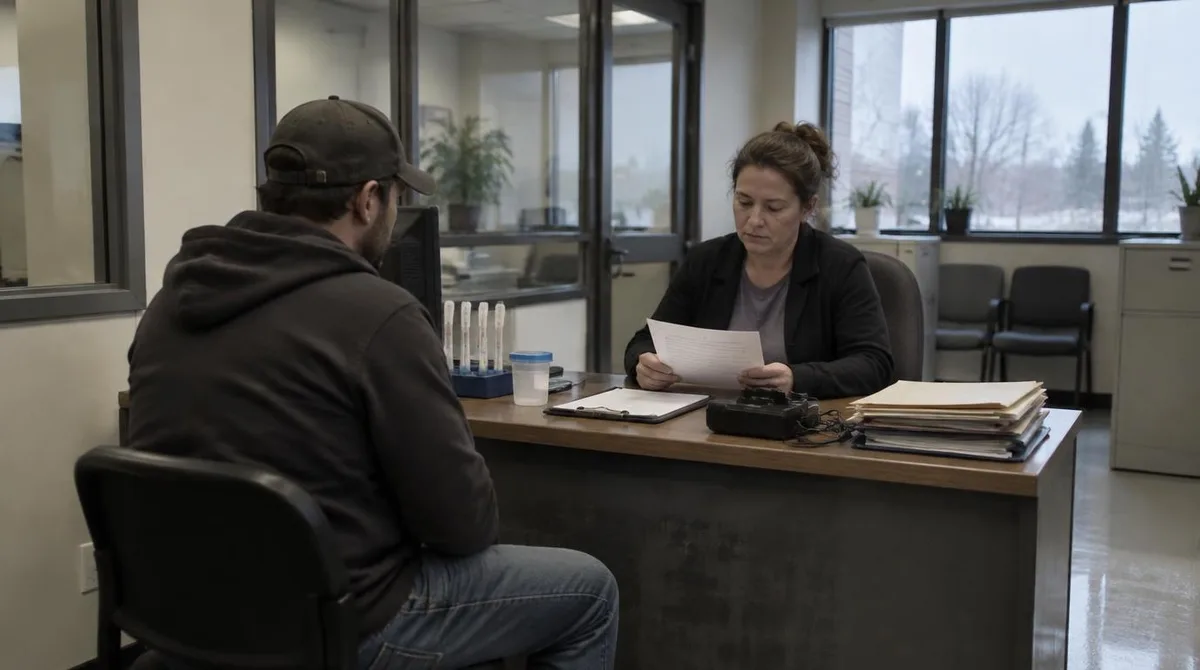
Substance-related terms are frequent as well. A court can forbid the use or possession of alcohol and drugs, order testing, or require treatment. Some people are fitted with an electronic monitor that reports their movements to officials. And for those of limited means, some courts allow community service to pay off probation fines.
The exact mix depends on the offense. In New York, for example, Rendelman's guide lists conditions that range from finding employment and paying restitution to staying away from high-crime areas and attending substance abuse counseling.
How long does probation last?
The length depends on the offense and the jurisdiction, and the differences can be large. New York's statute offers a useful illustration. Under NYPL 65.00, as summarized in the Rendelman guide, a Class B misdemeanor generally carries one year of probation, a Class A misdemeanor runs one to three years, and most felonies carry three to five years.
The exceptions stretch much longer. In New York, felony sexual assault convictions can carry ten years of probation, and certain Class A drug felonies up to twenty-five. Unclassified misdemeanors run one year if the original sentence was under three months, otherwise two or three.
What this means in practice: a reader should never assume a standard term. The sentencing order itself states the length, and the probation officer's instructions state the rules. Both documents are worth reading carefully, because both are enforceable.
What happens when someone is accused of violating probation?
A violation does not start with an arrest. It starts with the probation officer. If the officer believes the conditions were breached, they can file what is called a Violation of Probation, or VOP, with the court, according to Rendelman's explanation of New York practice.
The guide distinguishes two kinds of violation:
- Technical. A failure to follow a required protocol, such as missing a drug counseling session or failing to report to the officer.
- Substantive. A major breach, most commonly committing a new offense.
The person is notified of the allegations and must attend a hearing, usually before the same judge who imposed the original sentence. Missing that hearing can lead to a bench warrant for arrest. At the hearing, the judge has three options: continue probation on its current terms, modify the terms, or revoke probation entirely. Revocation means serving the sentence for the original crime, in the words of the New York guide. For related coverage, see How bail works, and what actually decides who goes free before trial.
One point deserves plain language here. A violation allegation is an allegation. The hearing is where the court decides whether the breach actually happened, and the outcome is not predetermined. But the stakes are real: freedom itself is on the table, which is why the guide's practical warning is not to take the allegation lightly.
Can probation end early?
Early termination exists, but it is not automatic. A probationer typically asks the court to end supervision early, and the request usually rests on a clean compliance record, completion of any required treatment or programs, and the position of the probation officer. The rules and procedures vary by jurisdiction, so the practical step is to check the local rules or consult counsel before filing anything.
What compliance buys, in other words, is options. A person who has met every condition, paid restitution, and finished required programs has a far stronger basis to ask a judge to lift the supervision than one who has accumulated technical violations along the way. The officer's report on that record will carry real weight at the hearing.
Where probation fits in the wider system
Probation sits at the center of a chain of decisions that starts long before sentencing. Most criminal cases end without a trial, and the plea that produces a probation sentence is usually negotiated; our plea bargain explainer covers why that happens. What happens in the courtroom before that, from the first appearance onward, is covered in our guide to arraignment, and release before trial is a separate question addressed in how bail works. This connects to our earlier piece, How plea bargains work, and why most criminal cases end without a trial.
After probation ends, a conviction record remains, though some people may qualify to have it sealed or cleared; see how expungement and sealing work. More coverage of the courts sits in our legal section.
The evidence on probation is mixed, and honest coverage should say so. The arrangement avoids incarceration and its costs, but it also embeds the state in daily life through reporting, testing, and search conditions, and a technical violation can convert a community sentence into jail time. The conditions are the mechanism, and reading them closely, before signing, is the one step a person on probation controls completely.