A public defender is a government-employed lawyer who represents people accused of crimes when they cannot afford to hire one. The job carries the same duties as any criminal defense lawyer: challenge the evidence, protect the client's rights, and advise on pleas. What makes it hard is volume, not skill.
Defenders typically carry many active cases at once, far more than a private firm would assign one lawyer. That means less time per client, and it means the lawyer's judgment about triage — which motion to file, which hearing to push — becomes the hidden architecture of the case. This article explains how the system works, where the pressure comes from, and what a defendant can reasonably expect.
The word "public" in the title is doing real work. As Wikipedia's entry on the term traces it, "public" comes from the Latin publicus, rooted in populus, the people — the office exists because the community decided that defense counsel is a shared obligation, not a private purchase.
What does a public defender actually do?
A public defender does everything a retained defense lawyer does. They meet the client, review the charging documents, argue bail, negotiate with prosecutors, file motions, and try cases. The difference is the client and the paycheck. The client did not choose the lawyer, and the lawyer is paid by the same government that is prosecuting the client.
That setup raises an obvious question about loyalty. The answer is professional ethics: the defender's duty runs to the client alone, not to the office, the judge, or the prosecutor. Courts have treated that duty as fundamental, and a defender who soft-pedals a case to stay on a judge's good side would be violating it. In practice, defenders are often the most experienced trial lawyers in the building, because they are in court constantly.
The work also starts earlier than most people think. Long before trial, the defender is involved in what an arraignment is, and what happens next, and in the bail decision that determines whether the client waits at home or in jail. Early advocacy matters because a person held in custody loses jobs, housing, and leverage, whatever the eventual outcome.
Why are caseloads the central problem?
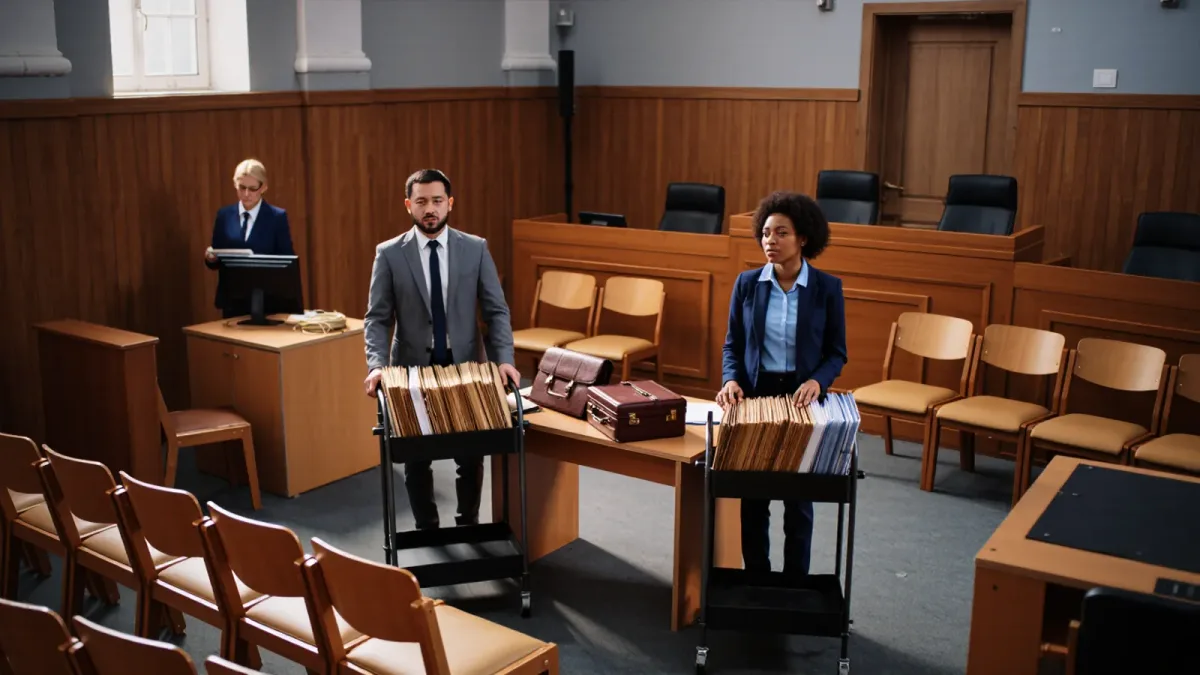
Volume is the defining condition of the job. A private criminal lawyer might handle a handful of active matters. A public defender commonly handles dozens at a time, and in underfunded jurisdictions the number can climb far higher. There is no single national caseload ceiling, and standards vary by state and by office, so any specific figure would need to be checked against the rules of the jurisdiction involved.
The consequences show up in concrete ways. Meetings with clients get shorter. Investigations get thinner, because investigators are shared across the whole office. Lawyers may learn the facts of a case shortly before a hearing. None of this means the lawyer stops caring; it means the lawyer must ration attention, and the rationing is invisible to the client and to the public.
Caseload pressure also shapes the system's output. Because most prosecutions end in negotiated pleas rather than trials — a pattern explained in how plea bargains work, and why most criminal cases end without trial — the defender's most consequential work often happens in a hallway conversation, not a courtroom. A rushed negotiation is harder to see than a rushed trial, but it can matter just as much.
How does courtroom triage work?
Triage is the unsentimental core of the job. When a lawyer cannot give every case full attention, decisions have to be made about where attention goes. A case heading to trial needs preparation that a case likely to resolve by plea does not. A client in custody needs action this week; a client released pending trial can sometimes wait.
Good offices triage openly, with supervisors reviewing assignments and shifting work when someone is drowning. Weak offices triage silently, which means the loudest case or the nearest deadline wins. For the defendant, the practical effect is this: the more the client can help — by gathering documents, listing witnesses, and being reachable — the more the lawyer can do with limited hours.
Readers should be clear that triage is an institutional fact, not an excuse. If a defender misses a filing deadline or fails to raise a suppression issue, the client can be harmed in ways that are hard to undo later, including on how appeals work, and what a standard of review actually decides. Appeal courts generally look back at the trial record, and a claim nobody preserved is a claim that is much harder to make.
What are the ethical rules defenders must follow?
Public defenders are bound by the same professional conduct rules as every lawyer in their state. They must keep client confidences, avoid conflicts of interest, communicate honestly, and provide competent representation. Conflicts deserve special mention: when one office represents many people from the same incident or the same neighborhood, the office must screen for clients whose interests clash, and decline or reassign where they do.
Competence under caseload pressure is the live ethical question. Bar associations in several states have issued formal standards on maximum caseloads precisely because excessive volume can make competent representation impossible. A lawyer who accepts work they cannot perform violates the rules even if the overload came from above. In practice, some defenders have refused new appointments or litigated caseloads directly — a rare and difficult step, since refusing work leaves someone else unrepresented.
There is also the loyalty problem in reverse. Because the office is funded by the government, defenders sometimes have to fight their own employer over budgets. That fight is legitimate: asking for resources to represent clients is part of representing clients.
What should a defendant expect, and what are the limits?
A person facing charges who cannot afford counsel should expect a qualified lawyer, honest advice, and confidentiality — not unlimited hours. The defender will likely push toward resolution if the evidence is strong, and toward trial if it is weak. The client's job is to tell the truth, show up, and raise concerns early rather than at the courthouse door.
Expectations should be calibrated to the process itself. The bail fight comes first, and its logic is covered in how bail works, and what actually decides who goes free before trial. Charges may later be tested by a grand jury or a preliminary hearing, a distinction explained in what a grand jury does, and how it differs from a preliminary hearing. At every stage, the presumption of innocence holds: charged is not convicted, and an accusation is not a finding. This connects to our earlier piece, How bail works, and what actually decides who goes free before trial.
One caveat belongs in plain text. This is information about how the system works, not legal advice. Anyone with a real case needs advice from a qualified lawyer — a public defender if eligible, or private counsel if not — because the details of jurisdiction and record decide almost everything.
Why the job matters to everyone, not just defendants
The evidence in plain view supports a simple conclusion. A functioning defense bar is a quality-control mechanism for the whole system: it tests the police work, the charging decisions, and the plea offers that everyone else takes for granted. When the defense side is starved, the checks weaken, and the cost lands on accuracy, not just on speed.
What remains unknown is the fix. Caseload standards, funding, and staffing are decided jurisdiction by jurisdiction, and the research base on which interventions work best is thinner than the problem's size suggests. What the record does establish is the mechanism: the quality of the worst-funded lawyer in the courthouse sets a floor under the quality of justice for everyone who passes through it.