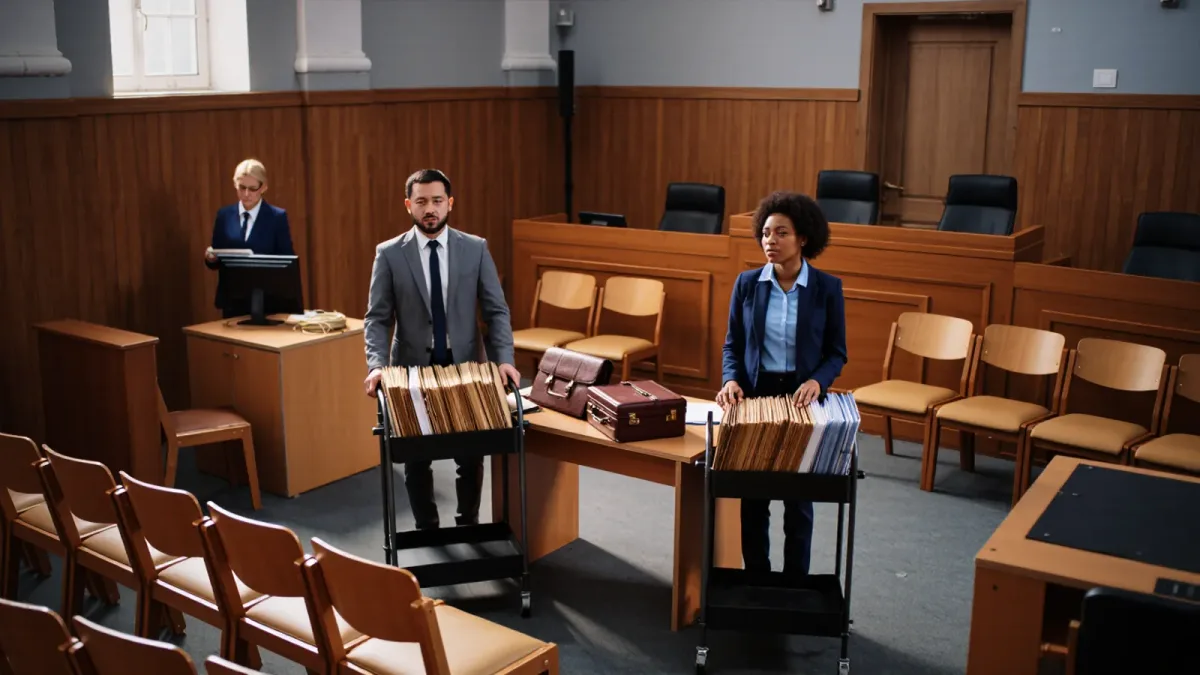
A mistrial is a trial that ends without a verdict, declared by the judge when the proceedings cannot properly continue or when the jury cannot reach a unanimous decision. It is not an acquittal and not a conviction; legally, the case is exactly where it was before jury selection, and prosecutors generally have the option to retry it from the start.
This article explains why mistrials are declared, what happens to the jurors and the parties afterward, and how the double jeopardy rules decide whether a second trial is allowed. It publishes information, not legal advice; mistrial consequences depend on the specific record and jurisdiction.
Mistrials appear in headlines as dramatic endpoints, but in the system's own terms they are interruptions, not endings. The Federal Judicial Center's studies of federal jury verdicts found hung juries in a small share of federal criminal trials — a few percent in most years — and most post-mistrial cases are resolved by plea or retrial rather than dismissal, per the center's 2003-2009 jury research summarized for the courts.
Why does a judge declare a mistrial?
The trigger that readers meet most often is the hung jury, but it is only one of several. The standard categories:
- Deadlocked jury: jurors announce, usually after further instructions, that agreement is impossible. The judge may accept the impasse and declare a mistrial, or press deliberation longer.
- Fatal procedural error: an error so prejudicial that a curative instruction cannot fix it — inadmissible hearsay blurted before the jury, an improper statement by a lawyer, an evidentiary disaster revealed mid-testimony.
- Juror problems: a juror becomes ill, is discovered to be biased or investigating the case independently, or is exposed to outside information.
- Legal impossibility: a defendant becomes too ill to stand trial, a key witness dies, or a defect in the charge emerges that cannot be corrected.
- Manifest necessity: the umbrella doctrine from United States v. Perez (1824), requiring that the mistrial rest on "high degree" of necessity — the standard that keeps the declaration from being a way around double jeopardy.
Perez is the anchor case: decided in 1824, it held that a discharged jury before verdict does not bar retrial, so long as the discharge was required by "necessity." Every modern mistrial analysis traces back to it.
What happens to the jurors?
They are released. A jury that cannot agree is discharged, and its deliberations stay secret — jurors may speak publicly afterward if they choose, and in high-profile cases some do, but the records of deliberation remain protected. Jurors who served through a mistrial are generally disqualified from the retrial; a fresh panel is drawn.
Judge-jury interactions during a deadlock follow a script meant to avoid coercion. The common device is a supplemental instruction urging further deliberation, modeled on the American Bar Association's standards; appellate courts review the wording for pressure, and an instruction that tells holdout jurors their views are less than those of the majority risks reversal.
Related stories: What a grand jury does, and how it differs from a preliminary hearing · How plea bargains work, and why most criminal cases end without a trial.
Does double jeopardy bar a second trial?
Not usually, but the reason depends on who wanted the mistrial. After a hung jury, retrial is plainly allowed: the Supreme Court held in Richardson v. United States (1984) that a defendant acquitted of nothing by a deadlocked panel may be tried again. After a mistrial declared at the prosecution's request or on the court's own motion, the manifest-necessity test governs — retrial is barred if the judge's action was unjustified.
The sharpest rule favors the defense's own motion. If the defense asks for the mistrial, it is treated as a strategic choice waiving the double jeopardy objection. The only exception is conduct the prosecution intended to provoke the motion, per Oregon v. Kennedy (1982) — a standard so hard to prove that even intentional-looking misconduct rarely meets it, a limitation the dissenting justices in Kennedy predicted would invite abuse. Defense lawyers therefore exhaust alternatives, such as curative instructions, before agreeing to end the trial.
What are the prosecution's options afterward?
Retrial, plea negotiation, or dismissal. Each carries known costs: a retrial costs the expense of a second trial with evidence another year older; a dismissal forfeits the case; and a plea converts the mistrial into a conviction at a discount, which prosecutors often accept after a deadlock because the jury vote revealed weaknesses.
Defense leverage improves after a hung jury in practice, though the research is more cautious than the folklore. Studies of hung juries, including the National Center for State Courts' multi-jurisdiction study published in 2004, found deadlocks clustering in cases with weak evidence, close jury splits, and jurisdictional differences — patterns that inform both sides' renewed negotiations. Some cases retried after deadlock end in conviction, others in acquittal, others in second deadlocks; the mistrial itself predicts nothing certain.
Who pays for a retrial?
The government pays the prosecution side; the defendant's exposure depends on custody and funding. A person detained before trial usually remains detained through the retrial unless release conditions change, which adds pressure to plead. A defendant who cannot afford counsel continues to be represented by the public defender or appointed counsel through any second trial, at public expense, as the right to counsel requires.
Retrial also resets the record: opening statements, exhibits, and objections begin again before a new jury that knows nothing of the first proceeding. Prior trial transcripts become working tools for the lawyers, not evidence for the new panel.
What should readers watch after a mistrial is declared?
The next filing. Within weeks of a hung jury, the docket usually shows one of three things: a retrial date, a plea agreement, or a dismissal entered for want of prosecution. Which one appears tells more about the case's real strength than the mistrial headline does — a fact worth holding in mind the next time a deadlocked jury is reported as a victory for either side.
It also helps to keep the vocabulary exact in what one reads afterward. A person whose trial ended in a mistrial is neither acquitted nor convicted; the correct description is charged, with the first trial unresolved. Coverage that gets that word wrong gets the whole situation wrong, because every question that follows — retrial, release, plea leverage — depends on there being no verdict at all.
For more context, read How plea bargains work, and why most criminal cases end without a trial.
For more context, read What an arraignment is, and what happens next.