Why do true crime podcasts hold the audience they do? This explainer can answer only part of that question from evidence, and it is worth being upfront about which part. What the retrieved sources establish here is lexical: the word at the center of the genre, and what it promises. The rest — the psychology of the appeal, the effects on investigators and juries — is treated below as questions rather than findings, because the available sources do not settle them.
The word at the center of the genre is deceptively small. Merriam-Webster defines "why" as "the cause, reason, or purpose" for which something is done (Merriam-Webster). The Cambridge Dictionary treats "why" as the word used to ask for what reason or purpose something happens (dictionary.cambridge.org). Vocabulary.com, for its part, defines the noun "why" as "the cause or intention underlying an action or situation," especially in the phrase "the whys and wherefores" (Vocabulary.com). Merriam-Webster dates the adverb's first known use to before the 12th century and traces it through Middle English to the Old English hwȳ, the instrumental case of hwæt, meaning "what." That small, old word names exactly what every true crime episode, whatever its merits, sets out to hunt: who did it, why, and whether anyone was ever held to account. Listeners stay, at least in part, for that search for a cause.
Why does the brain treat a crime story like a puzzle?
Whether it does, and by what mechanism, is an empirical question this article cannot answer from its sources. What can be said without overreaching is structural. Serialized shows release in episodes, and each installment ends before the picture is complete. An unfinished story is, by definition, one a listener has a reason to return to; that is a description of format, not a finding about cognition. Serialization also supplies what a single news report cannot: time to hold details in mind, test theories and change them. Readers following this should also see How seasonal patterns show up in crime data, and which ones hold. We covered a connected angle in How seasonal patterns show up in crime data, and which ones hold.
A second layer sits on top of the factual one. Listeners are not only asking who did it. They are asking whether the system responded fairly — whether police worked the case hard enough, whether the prosecution overreached, whether the person now serving a sentence belongs there. That second question is why the genre so often drifts into questions about how clearance rates are calculated, and why they often mislead, because clearance numbers sit at the center of many episodes' implicit argument.
Why do people enjoy fear they can switch off?
This is the section where honesty requires the fewest conclusions. The idea that a podcast lets a listener experience danger at a distance — that the body reacts to a story while the mind knows the danger is not in the room — is a description that researchers who study media and emotion would recognize, but the retrieved sources here do not document it, and this article will not present it as settled. What can be said plainly is the mechanical part: a listener controls the volume, the pause button and the room lights, and the threat in the story is not in the room.
Whether listening to how abductions, scams and home invasions unfolded actually improves anyone's safety is a separate question the evidence does not settle here. The felt usefulness, whatever its basis, is part of how hosts justify the material, and part of what listeners report getting from it. The distance matters in another way too: the genre lets people think about death, betrayal and violence without the pressure to respond that real news of a nearby crime creates. It is fear filed under entertainment — which is a description of the framing, not a diagnosis of the audience.
What does the genre do to empathy — and to the presumption of innocence?
Here the record is mixed, and honesty requires saying so. At its best, true crime has redirected attention to cases that stalled: victims whose files sat unexamined, defendants whose convictions drew credible doubt. At its worst, it does the opposite of what a courtroom does. A podcast needs a protagonist and an antagonist, and the edit decides who plays which long before any verdict arrives.
The justice system's rule is the opposite. A person is charged, not guilty; the charge is an accusation, and the presumption of innocence belongs to the accused until a jury says otherwise. Podcasts are under no legal duty to honor that, and some do not. A listener who hears six hours about one suspect's oddities arrives at the real trial, or the real comment section, with a suspicion that feels like knowledge. It is not. It is an editorial framing wearing the costume of evidence.
Responsible shows flag this. They use "charged with" and "alleged" with care, they note when a case ends in acquittal, and they revisit episodes when new facts emerge. The audience can do part of this work too: treating every episode as one account, not the record. Readers who want the discipline of that distinction in print can see it applied in the cases desk, where status is dated and words like charged, pleaded and convicted are never swapped.
How has the boom changed what the public expects from investigators?
The most visible change is expectation of transparency. Listeners now arrive at crime news assuming they will hear the evidence, the timeline and the theories in detail — because a podcast gave them that for a different case last week. When a department releases a two-sentence statement, the gap between that and a six-hour episode reads, unfairly or not, as concealment.
The second change is expectation of speed and resolution. Serialized storytelling trains an appetite for answers on a schedule. Real investigation does not run on one. A case may sit for years while forensic work catches up, and the public's patience for that delay has, if anything, shortened. Our analysis of the genre's effect is that this cuts both ways: impatience can push departments to communicate better, and it can also push them toward announcements that outrun the evidence.
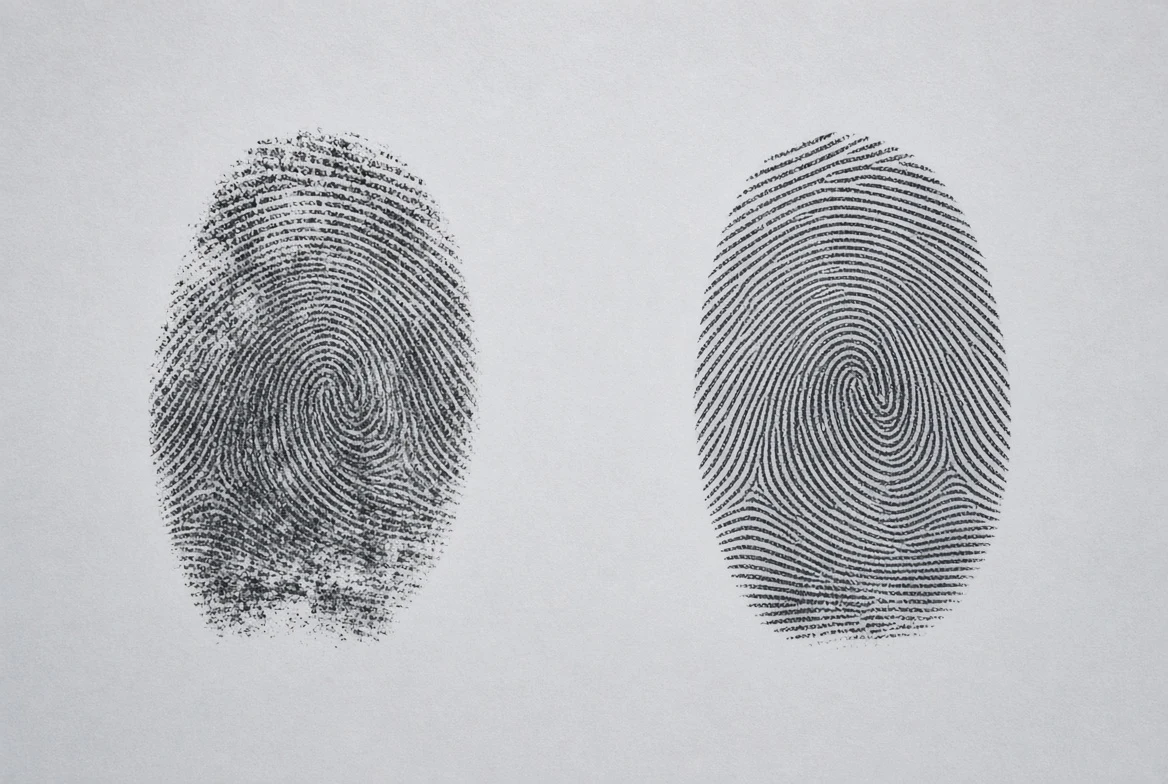
The third change touches forensic expectations. Podcast audiences have absorbed the vocabulary of DNA mixtures, cell-site records and bite-mark analysis, but not always the caveats. A method named on a show can sound settled when the underlying science is contested. The gap between popular confidence and measured accuracy is exactly what a careful look at how accurate fingerprint matching is, according to the studies is designed to close — and the same caution applies to nearly every technique a podcast episode mentions in passing.
What does it mean for juries, and what can a listener do about it?
Juries are drawn from the podcast audience, so the genre's framing now walks into courtrooms with the venire. Judges and lawyers have adapted: voir dire — the questioning that screens potential jurors — increasingly probes what people have consumed about a case or about forensic methods generally. A juror who expects certainty from DNA evidence, or who has already decided a defendant's guilt from a show, is a juror who needs to be questioned hard before being seated.
The practical steps for a listener are modest and worth stating plainly. First, separate the account from the record: a podcast is one telling, sourced or not. Second, check the status before sharing — charged, convicted, acquitted — because a case may have moved after the episode dropped. Third, be skeptical of any forensic claim presented without an error rate or a study. Fourth, notice the emotional arc; if an episode has decided who the villain is in episode one, that is an editorial choice, not evidence.
None of this argues against the genre. The best true crime work has freed the innocent, pressured stalled investigations and taught millions how the system actually works, including why victimization surveys count crime that police data misses. The risk sits not in the storytelling but in the audience forgetting it is storytelling. The hook is real and the psychology is ordinary. The discipline — treating allegations as allegations, and puzzles as unfinished — is what keeps a listener informed rather than merely entertained. We covered a connected angle in Why victimization surveys count crime that police data misses. Readers following this should also see Why victimization surveys count crime that police data misses.
The takeaway
What the sources here actually establish is small and worth restating: "why" is the word for cause, reason and purpose, and it has been in English, in one form or another, since before the 12th century. True crime is built on that word. The stronger claims often made about the genre — about how the brain responds, about fear enjoyed safely, about effects on verdicts — are questions this article can raise but not, on the evidence retrieved, answer. The genre's effect on the justice system is real but double-edged. It has raised demands for transparency and given cold cases new attention, while also feeding expectations of certainty, speed and clean villains that real investigations and real trials cannot honor. The evidence for the psychology is thinner than the confidence of the genre suggests, and honest coverage should say so.