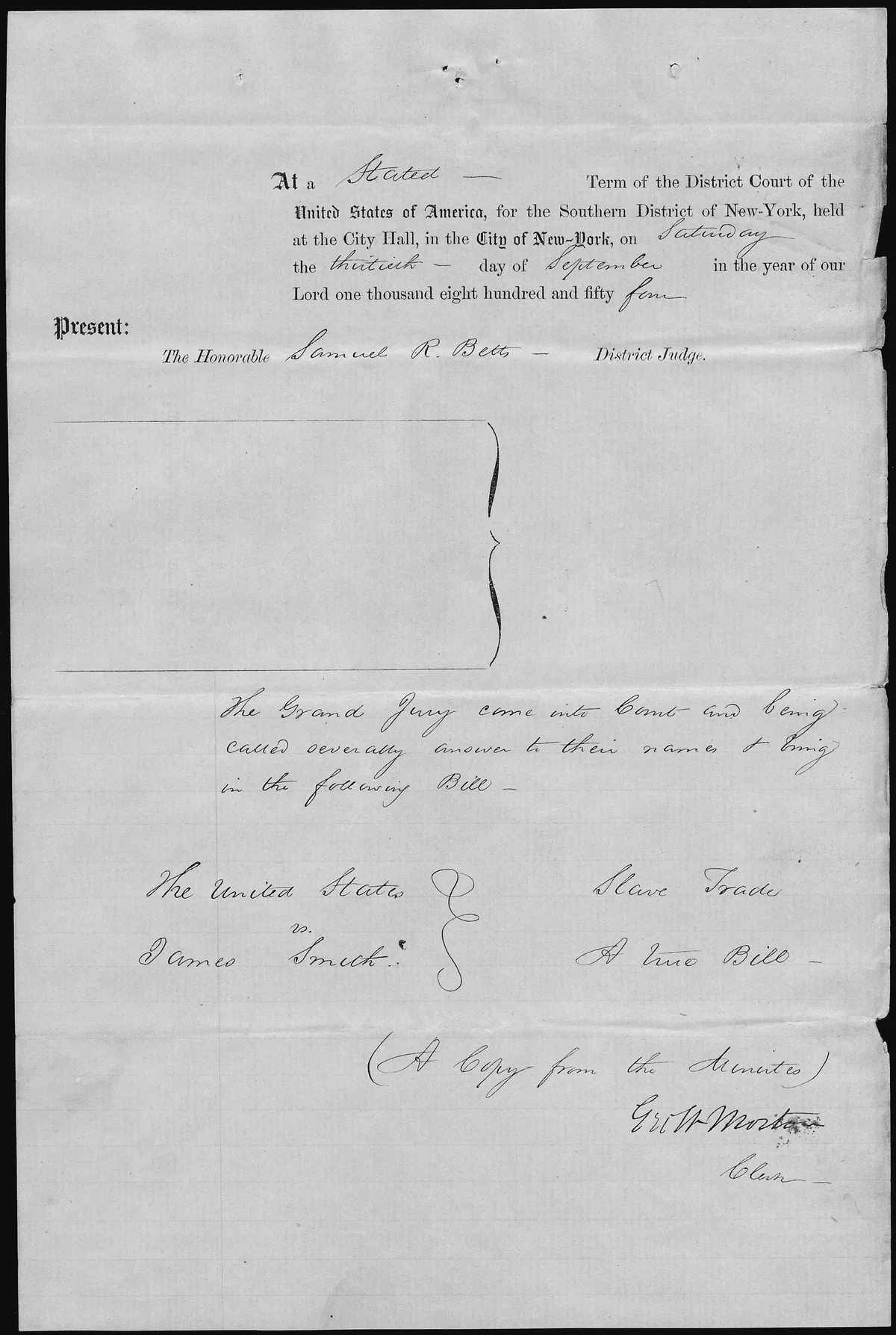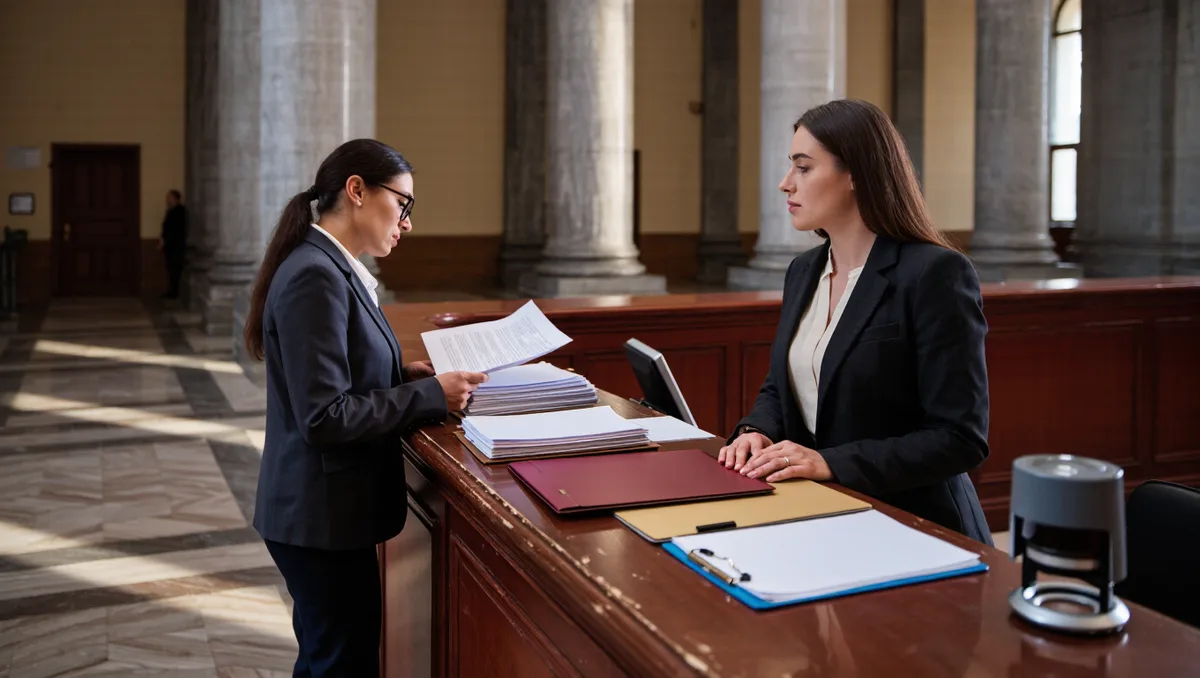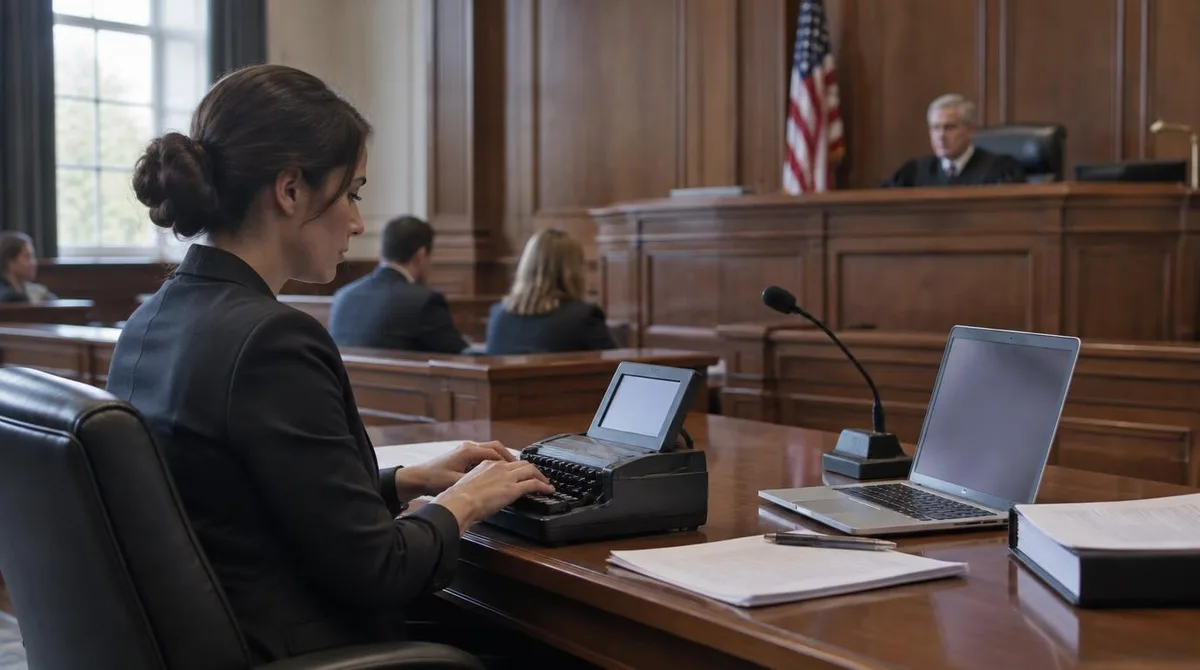
A court reporter makes the official record of a court proceeding. The reporter takes down testimony word for word as it is spoken. The certified written transcript follows, made on request. Federal law requires a verbatim record of what is said in court. The tools are shorthand, stenotype, stenomask, or a sound recorder, and the district judge picks.
The job sits at the center of how courts remember. Appeals, sentencing, and daily case management all run on the transcript. None of it works by memory alone. Rules govern what the record looks like years later, and those rules are public.
What must a court reporter record?
Federal law answers this directly. The Court Reporter Statute, 28 U.S.C. Section 753, lists what must be recorded, per the federal courts' published guidance. It covers every session of a criminal case held in open court. It also covers open-court sessions in other cases, unless the parties and the judge agree otherwise. A judge can add any session by rule or order. Every recorded session must be verbatim, and the district judge elects the method. The list is short. The choices on the books are:
- stenograph, written on a steno machine
- stenomask, with the reporter repeating speech into a covered microphone
- electronic sound recording, transcribed after the session
How does a transcript get made?
A transcript is produced when a party asks for it, or when the court orders it. Delivering that written record is one of the reporter's primary duties, per the federal guidance. Written transcripts follow Judicial Conference rules. The rules set page format, page rates, and delivery dates. Fees and formats come from one place, so a transcript looks the same from any reporter. Audio recordings go out to private firms the court picks. Those firms transcribe the sessions. The first party to order pays the original rate, and later requesters pay a copy rate. The reporter must also file a certified copy with the clerk of court. A filed transcript stays open for inspection only, for 90 days, unless a court extends that. We covered a connected angle in Justice news today: How to follow court cases like a pro, without getting misled.
How does someone become a court reporter?
Training takes two to four years, and the steno keyboard takes the most time, per the standard account of the job. Most states require a license by exam. The exam has speed tests at 180, 200, and 225 words per minute, plus a written test on terms, procedure, and ethics. Licensed reporters keep up at least 10 hours of continuing education a year. In some states a reporter is also a notary, able to swear in witnesses and certify the transcript. The speed mark cited in the field is 360 words per minute, a Guinness World Record set by Mark Kislingbury in 2004.
Who else makes the record besides stenographers?
Electronic recording has a firm place in the system. Audio courts use electronic reporters and transcribers instead. Those roles carry their own certifications. Voice writers repeat speech into a stenomask and hold their own certifications. Realtime reporters turn testimony into captioned text as it happens. Each path ends in the same place, a certified record. The national steno group offers its own ranks. Its Registered Professional Reporter title takes a four-part exam. The Bureau of Labor Statistics put median pay for court reporters at 63,560 dollars in 2022, with the top 10 percent above 91,280 dollars, per the field's published figures. Readers following this should also see Supreme Court decides six criminal cases by late January, most unanimously.
Conclusion: the record outlasts the day in court
A court reporter's work outlasts everything else in the room. The spoken proceeding ends in hours. The certified transcript becomes the version of events that appeals, researchers, and the parties rely on. Federal law requires the verbatim record. The Judicial Conference sets the rules that turn it into paper. State licensing keeps a trained professional behind the machine. Transcripts get made so that what a court decided stays checkable long after memory fades.