Certiorari is the Supreme Court's discretionary power to choose which cases it will decide: a party files a petition for a writ of certiorari, the Justices vote on whether to hear the case, and a grant requires a majority — four votes by longstanding practice, a threshold known as the rule of four. The Court receives thousands of criminal petitions each term and hears oral argument in only a small fraction, which makes the selection stage one of the least visible and most consequential steps in American criminal justice.
This article explains the selection process using the Court's own rules and published statistics; it is information, not legal advice.
How many criminal petitions does the Court receive, and how many does it grant?
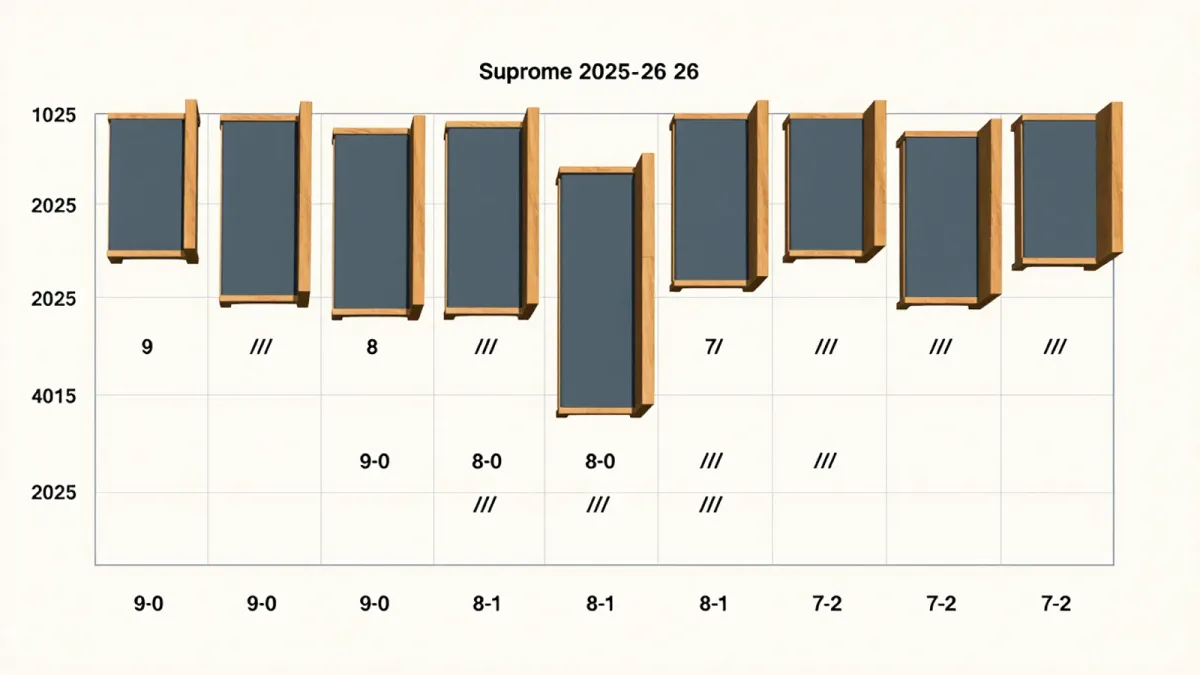
By the Court's own published figures, the docket has run to roughly 7,000 case filings in a recent term, with petitions for certiorari making up the overwhelming majority and the Court hearing oral argument in fewer than 100 cases. Criminal matters — from prisoners' habeas petitions to prosecutors' appeals of suppression rulings — make up a substantial share of that inflow, and the term's argued criminal cases typically number in the dozens.
The arithmetic is the point. A criminal defendant or a state asking the Court to intervene is asking for one of the rarest outcomes in the system. Grants cluster around recurring questions of federal law, and the Court's own rules say so: Rule 10 describes certiorari as warranted where a state court or federal appeals court has decided a federal question in a way that conflicts with another court's decision — the circuit split — or where a lower court has resolved a federal question of broad importance in a way that deserves the Court's review.
What happens when a petition is filed?
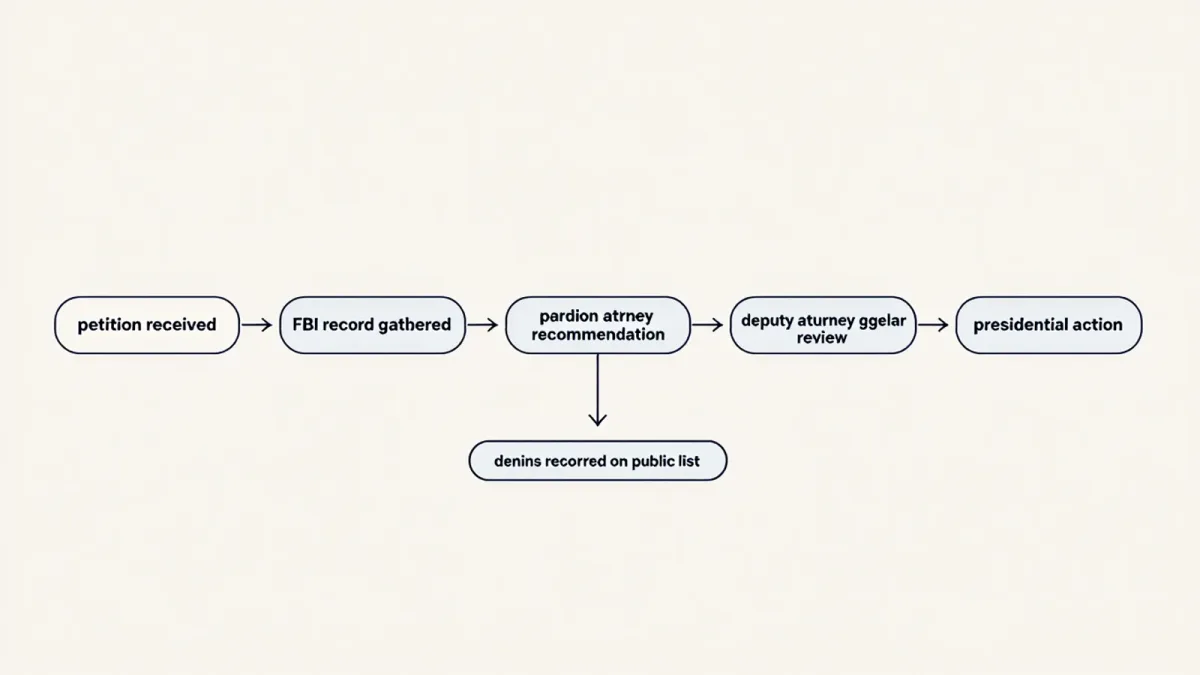
Every case follows the same documentary path, laid out in the Court's rules. The petition — capped at 9,000 words for most cases — states the question presented, the opinion below, and the reasons for review. The opposing party files a brief in opposition. The petitioner may reply. Amicus briefs can be filed with consent or leave.
At that point the papers reach the Justices' chambers. Each Justice's office, with its law clerks, reviews the file; for many petitions a single clerk's memorandum — the product of the so-called cert pool in most chambers — summarizes the case and recommends a course. The Chief Justice then places the case on a list for the Court's private conferences, where the nine Justices meet alone and vote. A case that draws four votes is "granted and noted"; the Court publishes that decision in its orders lists, and the publicly posted granted/noted list becomes the running record of the term's future docket.
What does a grant actually decide — and what does it not?
A grant decides only that the Court will hear the specific question the parties framed, not that any error occurred below. The Court also controls the question's scope: it may grant on one issue while denying the others, and it occasionally orders the parties to brief an additional question of its own choosing. Argument follows months later; decision follows argument, typically within the same October-to-June term.
Denial is its own event worth reading carefully. A denial means fewer than four Justices thought this case, at this time, deserved review — it establishes no precedent and implies no view on the merits. The Court says as much in its own guidance: a denial carries no judgment about the lower court's correctness.
Where does the 2026-27 criminal docket stand?
The Court's next term opens October 5, 2026, and its criminal docket was still forming as of mid-July 2026. Per SCOTUSblog's reporting in June 2026, the Court added cases to its October Term 2026 argument docket through its June orders lists while denying other notable petitions, and the granted/noted list on the Court's own website remained the authoritative count. The pattern is familiar from every term: a handful of grants each conference day through the spring and early summer, then a slowdown as the Justices finish issuing opinions in the cases they already have.
For criminal-justice readers, the useful mid-summer habit is to read the granted questions rather than the case names. A term's direction — how much Fourth Amendment review, which sentencing questions get unified, whether federal habeas narrows — is legible in those one-sentence questions before a single argument is heard.
Why does certiorari favor certain kinds of criminal cases?
The Court's selection incentives shape the criminal docket's composition. A split among the federal circuits or state courts of last resort on a federal question is the classic trigger, which favors cases raising genuinely contested interpretations of statutes and the Constitution over claims that turn on case-specific facts. Institutional questions — what standard appellate courts apply, what procedure the Constitution requires, how a federal sentencing statute is read — recur because they recur in thousands of courtrooms at once.
The selection stage is also where case volume meets discretion: the same procedural record that wins a grant in one configuration — a clean question, a published split, no intervening developments — can be denied when the question is entangled with unresolved facts. That is not a flaw in the system so much as its design: the Court is built to resolve uniform national questions, not to correct every individual case. The consequence, documented term after term in the Court's own statistics, is that meritorious individual claims of error end at the court of appeals far more often than they end at One First Street.
What should a reader take from a cert-stage story?
Three checkpoints. First, date the stage: a petition, a grant, an argument, and a decision are different events, and reporting that blurs them misleads. Second, read the question presented as the Court framed or will frame it, not as the parties' press releases describe it. Third, remember the presumption that applies to every underlying criminal case at this stage: a grant to hear a defendant's petition, or the government's, determines nothing about guilt or innocence — it decides only which court, and which nine Justices, will answer the question next — and on what timetable.