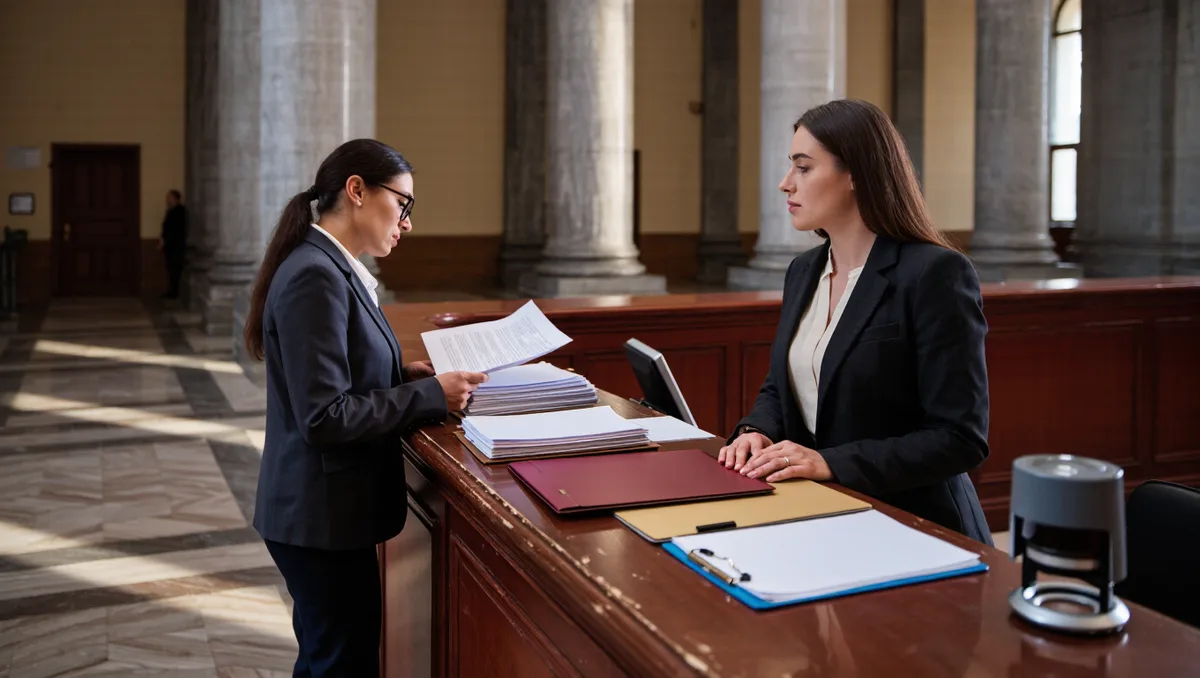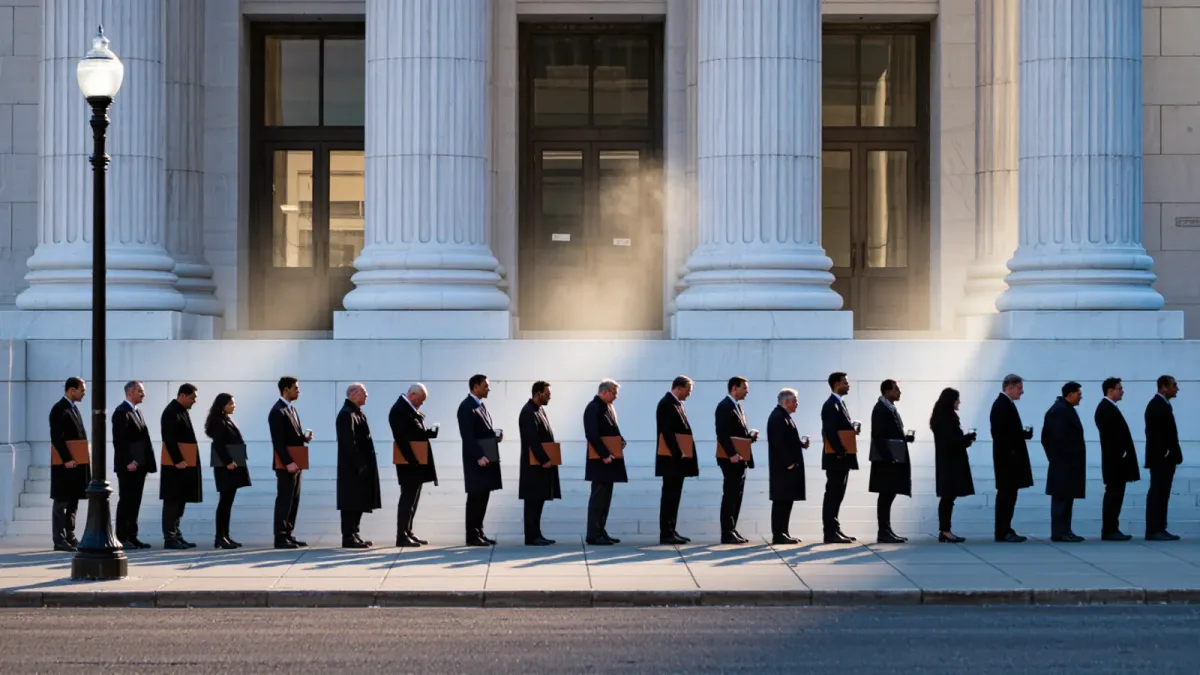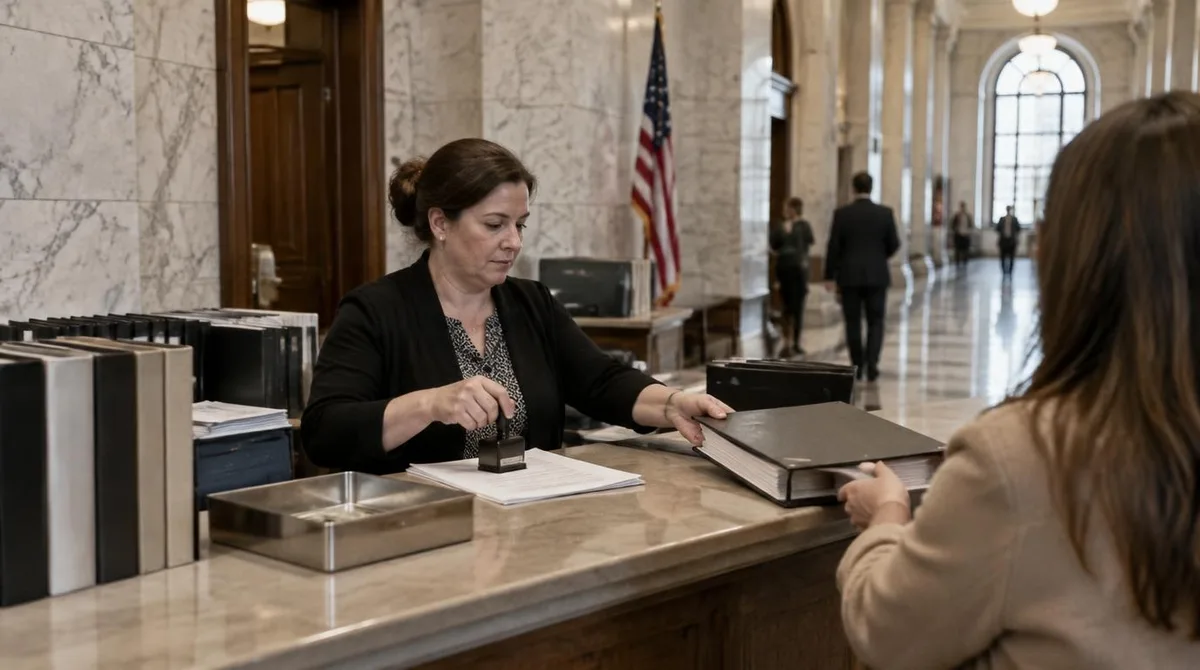
A court clerk's office runs the paperwork side of a courthouse. The federal judiciary defines the clerk of court as an administrative officer appointed by the judges to manage the flow of cases, maintain court records, and handle financial matters, per its glossary. Most filings meet that desk first.
The office touches a case at every step. It takes filings, keeps the file, records the money, and hands the public its clearest view of the court. When a record is sealed or a copy fee is due, the reason traces back to this desk.
What a clerk of court is
A clerk of court is an administrative officer appointed by the judges of the court, per the judiciary glossary. The stated duties are to manage the flow of cases through the court, maintain court records, handle financial matters, and provide other administrative support. The scope is the whole courthouse, not one case type.
That scope explains the desk most visitors meet. Filing fees, motions, and copies route through the office. The public counts on it to keep the record straight from the day a case opens.
How a case file gets built
The records side follows a set path, per the judiciary's records guidance. A federal case file holds a docket sheet and every document filed in a case. The steps run in order:
- 1. A party files a pleading, motion, or petition with the office, on paper or through CM/ECF, which stands for Case Management/Electronic Case Files, the judiciary's electronic filing system.
- 2. The document joins the case file, next to the docket sheet that tracks the case.
- 3. Case files and records appear on PACER, the judiciary's public access service, and can be read at the clerk's office where the case was filed.
- 4. National record disposition schedules later govern what the judiciary keeps, transfers, or destroys.
The path is the same for a small civil claim and a large fraud case. Scale changes the volume, not the route.
What the docket sheet and the file show
The docket sheet is the spine of the file. The file pairs that running log with the papers behind each entry, so the sheet says what happened and the documents say what it meant. A reader who starts at the sheet can find any filed paper it lists. The entries run in date order, so a newcomer can catch up fast. That pairing makes the file the surest account of a case. We covered a connected angle in FBI reports violent crime fell 3 percent in 2023; what the data can and cannot say.
What the public can and cannot see
Access runs through the clerk's office. Electronic records can be read there for free, and paper files stay available unless they were destroyed or transferred to the National Archives, per the judiciary's guide for reporters. Printing and copying carry per-page fees.
Some records stay closed. Sealed categories include unexecuted summonses and warrants, pretrial bail and presentence reports, juvenile records, and papers naming jurors, per the same guide. Discovery that was never filed often stays with the lawyers rather than the court. Most cases opened before 1999 still live on paper. Readers following this should also see How the Supreme Court chooses which criminal cases to hear.
The office also helps readers keep up. Courts may post high-interest files on pages of their own, and some offer automatic case alerts by feed, per the guide. A settled civil case usually shows as settled on the public record, though its terms may stay confidential.
Conclusion: why the desk matters
The clerk's office is where a court keeps its promises in writing. The glossary gives it the case flow, the record, and the money. The file pairs a docket sheet with every filed paper, on PACER or at the desk, within the limits the rules set. When people ask what a court actually did, this office holds the answer.