Sanctions enforcement is the machinery governments use to make sure economic penalties are actually obeyed. The penalties themselves are restrictions: bans on trade, frozen bank accounts, blocked transactions. Enforcement is everything that happens after the list is published, from banks screening customers to regulators investigating violations and imposing fines.
The practical consequence lands on companies, not just governments. A bank, an exporter, or a multinational that touches a sanctioned person or country can face fines, license loss, and public damage, even when the violation was accidental. This article explains who enforces sanctions, how the checks work, and what happens when they fail. It is information, not legal advice; a company facing a specific question should consult qualified counsel. Readers following this should also see How consent decrees work, and what they actually change.
Sanctions sit inside the wider world of enforcement, alongside the tools used in criminal and regulatory work. The difference is that most sanctions enforcement never involves an arrest. It happens inside compliance departments, before a payment is sent.
What are sanctions, and what forms do they take?
Sanctions are restrictions imposed by governments or international bodies to reach political, security, or economic goals without military force. According to sanctions.io's explainer on what sanctions are and why countries use them, they range from prohibiting trade with a country to freezing the assets of specific individuals or companies.
The toolkit is varied. Comprehensive sanctions block most trade and interaction with an entire country. Targeted, or "smart," sanctions focus on named individuals, organizations, or sectors. Financial sanctions freeze accounts and cut entities off from international markets. Travel bans and arms embargoes work at the level of movement and military equipment.
Governments reach for these tools for several reasons: national security, counterterrorism, human rights enforcement, preventing the spread of weapons, and deterrence. As the sanctions.io overview puts it, sanctions let governments signal disapproval and inflict costs without sending soldiers.
Who enforces sanctions in the United States?
In the American system, the work is split between agencies. Financial sanctions are administered mainly by the Treasury Department's Office of Foreign Assets Control, known as OFAC. Export controls are administered mainly by the Commerce Department's Bureau of Industry and Security. As Wikipedia's overview of United States government sanctions notes, other agencies are involved too, including the Justice Department, State Department, and Homeland Security, each with a piece of the trade and financial picture.
The legal authority comes from statutes that delegate embargo power to the President, among them the Trading with the Enemy Act of 1917 and the International Emergency Economic Powers Act of 1977. Congress has also passed country-specific laws, such as the Helms–Burton Act covering Cuba and the Comprehensive Iran Sanctions, Accountability, and Divestment Act of 2010. This connects to our earlier piece, How civilian oversight boards get power, and where they hit limits.
Restrictions vary in severity. Comprehensive programs target Cuba, Iran, North Korea, Russia, and certain conflict regions of Ukraine, heavily limiting nearly all trade and financial dealings between U.S. persons and those places. Targeted programs name specific individuals or entities whose activities run against U.S. foreign policy or national security goals.
How does day-to-day enforcement actually work?
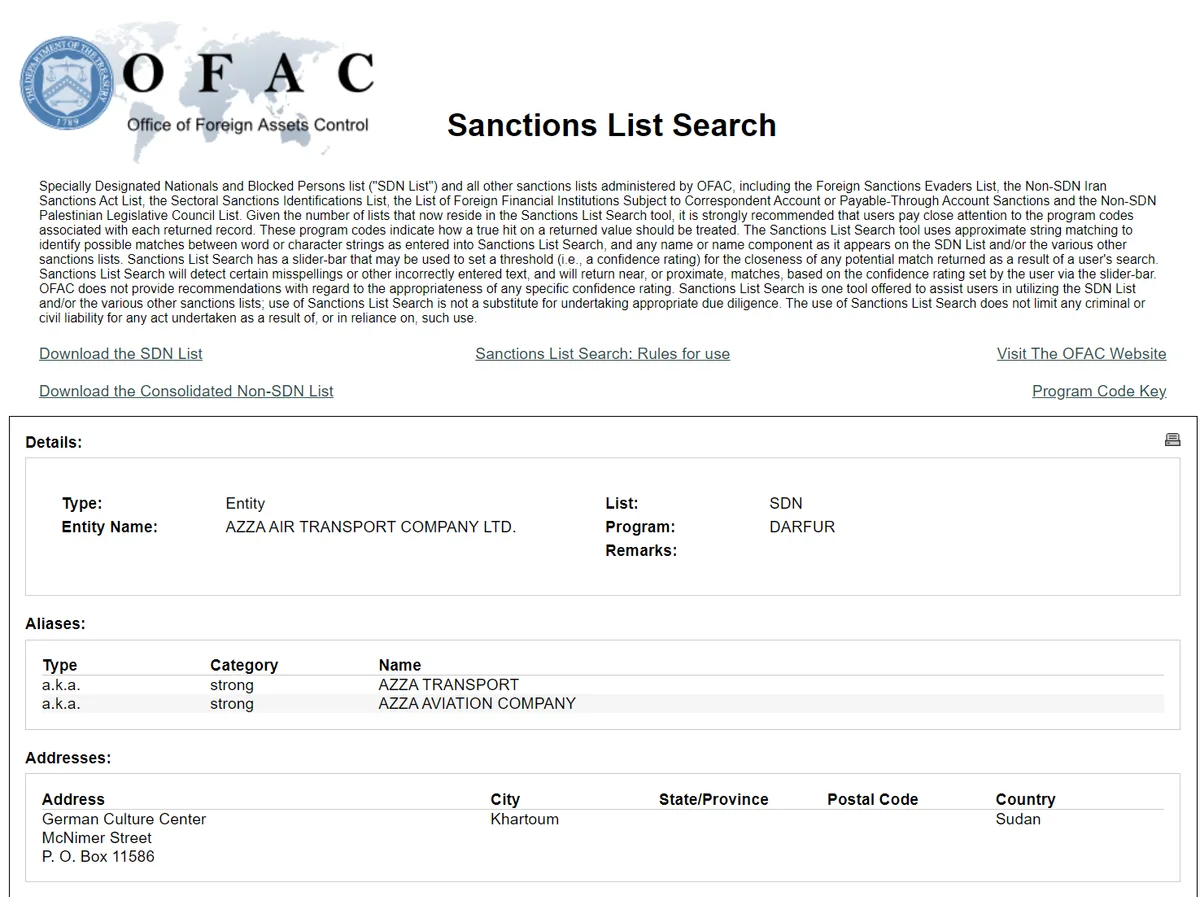
Most enforcement is preventive, and it is done by private institutions under legal duty. Financial institutions must check every customer, transaction, and counterparty against sanctions lists. Multinationals must make sure they are not trading with embargoed countries or named entities. The sanctions.io overview describes the core mechanics: automated screening systems that check customers and transactions in real time, ongoing monitoring to catch list updates, and adverse media checks.
The lists change. When a new person or company is designated, every screened system must be updated, and past relationships reviewed. A payment that was lawful last week can be prohibited this week. That is why compliance programs treat screening as continuous, not a one-time onboarding check.
Enforcement also has a second, coercive layer. The U.S. imposes what are called secondary sanctions, under which a non-U.S. person who transacts with sanctioned parties in violation of U.S. sanctions law risks designation itself, even where no U.S. connection existed. In plain terms: a foreign company far from American jurisdiction can still lose access to the U.S. financial system if it deals with the wrong counterparty. This is one of the main reasons sanctions lists reach so far across borders.
What happens when sanctions are violated?
Violations can bring multi-million-dollar fines, loss of licenses, and public scandal, per the sanctions.io overview. Regulators rarely show leniency even when a violation was accidental, which is why companies integrate screening at every stage of customer and transaction management.
The process generally runs in a familiar sequence. A screening system flags a match. The institution pauses the transaction and investigates whether the match is real or a false positive. If it is real, the institution may be required to block the funds and report the matter to the relevant authority. Investigations can follow, and with them penalties or settlements. The scale of the machinery matters here: a single large bank screens millions of transactions, so the enforcement burden is distributed across thousands of private compliance teams, with the agencies policing the edges.
For a director, the practical takeaway is that the risk is operational, not abstract. The question is not whether the company intends to violate sanctions. It is whether the company's systems would catch an unintended one before the payment clears.
How far does the reach go, and what are the limits?
The reach is broad. A 2024 analysis by The Washington Post, cited in Wikipedia's overview of United States government sanctions, found that 60 percent of low-income countries were under some form of U.S. financial sanction, and that the U.S. imposes three times as many sanctions as any other country or international body.
That breadth draws criticism. Critics raise humanitarian concerns about impacts on populations whose governments or economies are sanctioned. During the COVID-19 pandemic, United Nations High Commissioner for Human Rights Michelle Bachelet and some members of Congress asked the U.S. to suspend its sanctions regimes to help ease the pandemic's effects in sanctioned countries. Critics also point to cases where sanctions failed to deter the targeted behavior. Enforcement power, in other words, does not guarantee effectiveness, and the debate over the tool is part of the story.
There are structural limits too. Enforcement depends on the quality of the lists, the coverage of screening systems, and the willingness of institutions in other jurisdictions to cooperate. Evasion, through shell companies, intermediaries, or informal payment routes, is a constant cat-and-mouse. The rule is written once; the policing never ends.
What this means
Sanctions enforcement works because it is pushed out to the private sector. Governments write the lists; banks, exporters, and multinationals do the daily checking, on pain of fines and license loss. The system's strength is its reach through the financial system. Its weaknesses are the ones critics name: humanitarian costs, uneven effectiveness, and the gap between designation and real-world change.
For anyone reading a filing or a compliance policy tomorrow, the sequence to remember is simple: the list is the law, screening is the enforcement, and the penalty lands on whoever processed the payment. Read the footnotes first. That is where the exceptions, the licenses, and the real exposure live.