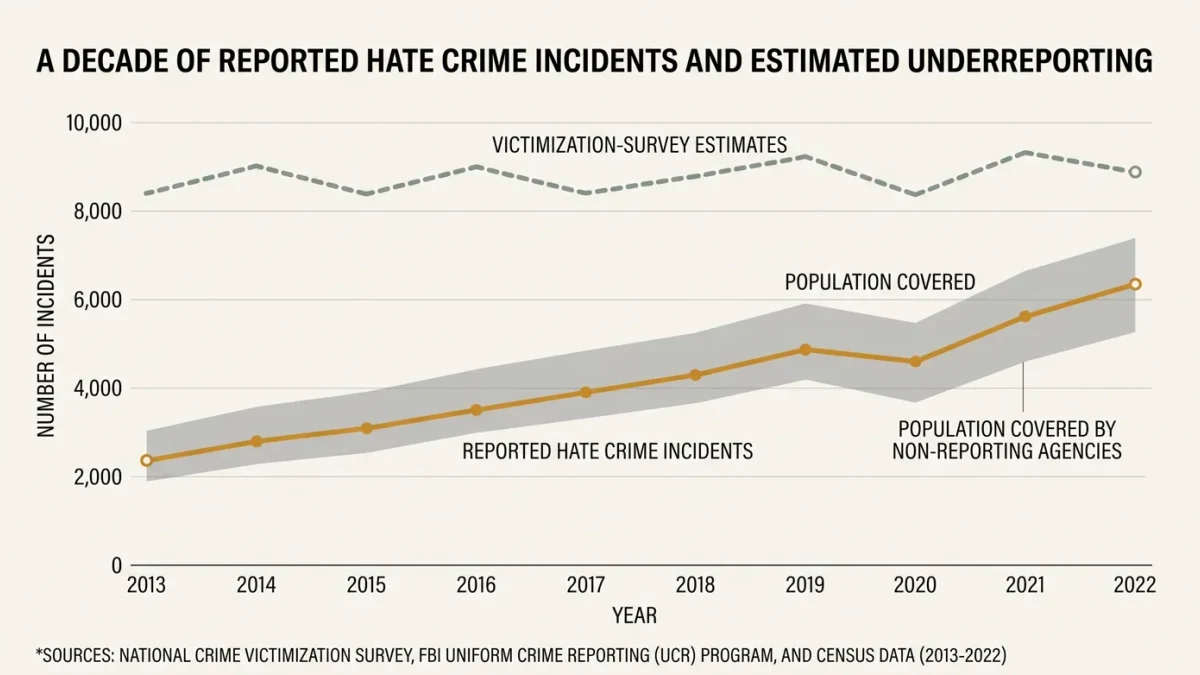
The nation's victimization survey counts more crime than police do because most victims never call the police: per Bureau of Justice Statistics published data, fewer than half of violent victimizations in recent years were reported to law enforcement, and only about a third of household property crimes were. The National Crime Victimization Survey exists precisely to count the offenses the reporting system never sees.
This comparison of two federal measurement systems is information, not legal advice.
What is the National Crime Victimization Survey?
The NCVS is a large annual household survey administered by the Census Bureau on behalf of the Bureau of Justice Statistics. Interviewers contact a rotating national sample of roughly 240,000 people in about 150,000 households each year and ask whether anyone in the household was the victim of a listed offense during the preceding six months, whether or not the matter was reported to police. Each household stays in the sample for several interviews, which lets analysts build panel-like estimates of victimization over time.
The survey covers rape and sexual assault, robbery, aggravated and simple assault, personal larceny, and household offenses including burglary, motor vehicle theft, and other property theft. It deliberately excludes homicide, which a victim cannot report, and commercial crimes, since businesses are not in the household frame. Its estimates carry published margins of error and are weighted to represent the national household population.
Why does the gap between the two systems exist?
The gap has three documented sources. First, non-reporting: per BJS published analyses, victims most commonly say they dealt with the matter another way, believed it was a private or personal matter, or felt the police could not or would not help — reasons the survey records directly. Second, definitional differences: the NCVS counts acts that meet its survey definitions regardless of whether a prosecutor would charge them, while police records count only offenses as classified by responding officers. Third, mechanical differences: the survey counts victims and incidents; police counts reflect recorded crimes, which depend on calls for service, officer discretion, and department filing practices.
None of this means either number is wrong. The two systems measure different stages of the same funnel: events that happened, events victims tell interviewers about, and events that reach a police record. The Bureau of Justice Statistics itself publishes the comparison each year rather than treating one series as the truth.
How big is the gap, in the published numbers?
Per BJS published data for recent survey years, violent victimization reported to police has run in the low-to-mid 40 percent range, property crime reporting near 30 percent, and rape or sexual assault reporting far lower — around one in five or six victimizations in some years. In raw counts, the survey has regularly recorded several million more violent victimizations than the FBI's offense counts record crimes, a difference larger than the entire annual change in either series.
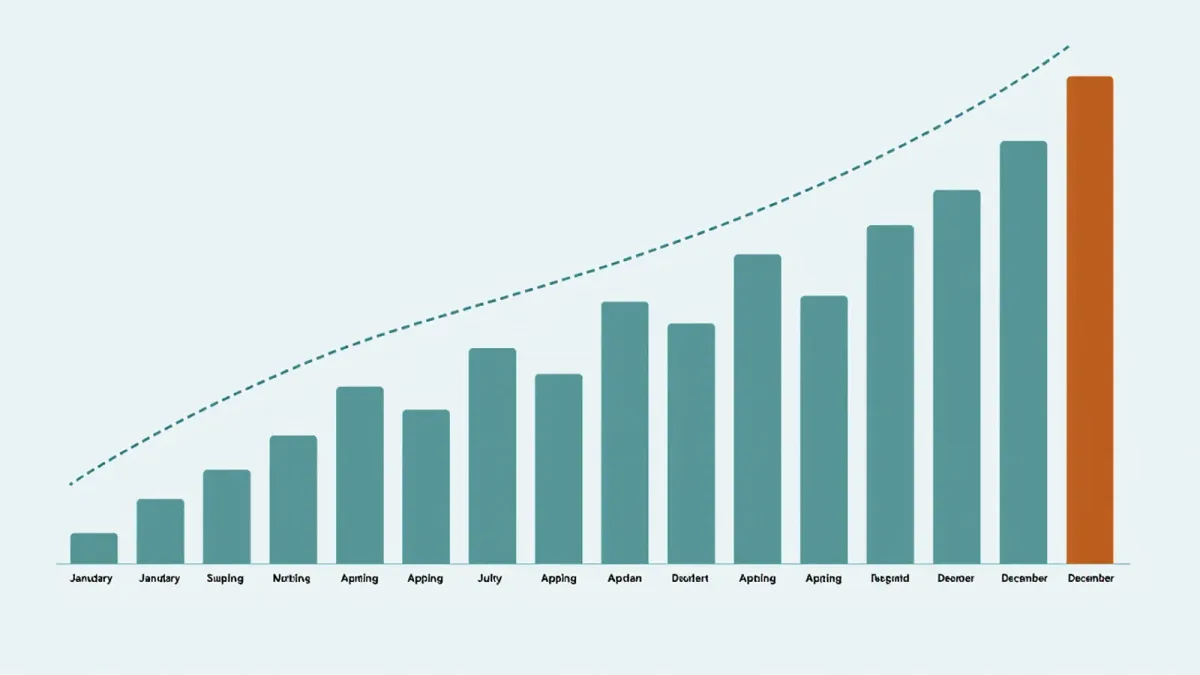
The gap is also not static. Reporting rates move with trust in police, with the offense mix, and with policy: after high-profile incidents of disputed police conduct, BJS and academic researchers have measured measurable dips in reporting willingness in some cities. A change in police counts can therefore reflect reporting behavior rather than underlying offending — something police data alone cannot reveal.
What can the survey show that police data cannot?
Four capabilities stand out in the published record:
- It counts unreported crime, including the roughly three-fifths of violent victimizations that never reach a police file.
- It captures victim, offender, and incident characteristics consistently across the country, not as recorded by hundreds of different agencies.
- It measures why victims do not report, in the victims' own categorized reasons.
- It supports year-to-year comparison with stable methods, because the survey design does not change when local police practices do.
Why do victims choose not to report?
The survey asks this directly, and the published answers have stayed stable for years. Per BJS published tabulations, the most common reasons victims give are that they handled the matter privately, that the incident was not important enough, or that they believed police could not do anything about it. A substantial share of sexual assault victims cite fear of reprisal or shame, and BJS's methodological research shows this group is the most undercounted even within the survey itself.
Trust moves the numbers. Academic studies using NCVS microdata have linked measurable drops in reporting willingness in some cities to periods of contested police conduct, meaning a decline in recorded crime can coincide with a rise in actual victimization. This is the central reason BJS maintains both systems: neither can substitute for the other when reporting behavior itself is the variable.
What are the survey's own limits?
The NCVS misses things police data catches. It excludes homicide entirely, counts only households and residents — including some but not all institutional populations — and, like any survey, depends on memory and willingness to disclose: victims of intimate partner violence and sexual assault underdisclose in interviews, per BJS's own methodological research. Its sample design also produces wide intervals for rare offenses and for state-level estimates, which is why the published figures are national and large-metro, not per-city.
Its redesign history matters for trend reading: a major 1992 redesign raised measured rape and assault, and a 2016 methodological period left a documented break in the series. Per BJS's published technical documentation, comparisons across those boundaries are labeled as non-comparable by the agency itself.
How should readers use the two series together?
Use the survey to answer whether victimization rose or fell and why people do or do not report; use police data to answer where recorded offenses concentrate and how agencies respond. When the FBI's 2023 data showed recorded violent crime declining while the survey showed flat-to-rising victimization, BJS's own commentary treated both as true at different stages of the funnel. A reader who holds the two systems apart sees the whole pipeline: what happens, what gets told, and what gets recorded — three numbers, none of which should be mistaken for the others.