A cold case unit is a small police team that re-examines unsolved violent crimes when new evidence or new tools emerge. A cold case, in standard usage, is an unsolved crime with no active investigation, but where new facts could still surface. Most units work homicides and sexual assaults.
Reopening rarely happens by chance. A file moves when a trigger lands: a DNA result, a family-tree lead, a new witness, or an old item that can now be tested. Each trigger has changed how police treat old files, and the changes reach the laboratory as much as the squad room. This connects to our earlier piece, Why victimization surveys count crime that police data misses.
What turns an unsolved crime into a cold case?
Time and stalled leads do most of the work. The heaviest caseloads are murder and rape, which, unlike minor crimes, generally face no time limit for prosecution, per the standard reference account of cold cases. Those files stay legally open even when no one is assigned to them. A case goes cold when the leads run out, not when the law closes it.
The label describes the state of the file, not the size of the agency. Small departments hold old unsolved files too, and many cannot spare a detective for them. The work waits until someone finds a reason to pick the box back up.
What triggers a new review?
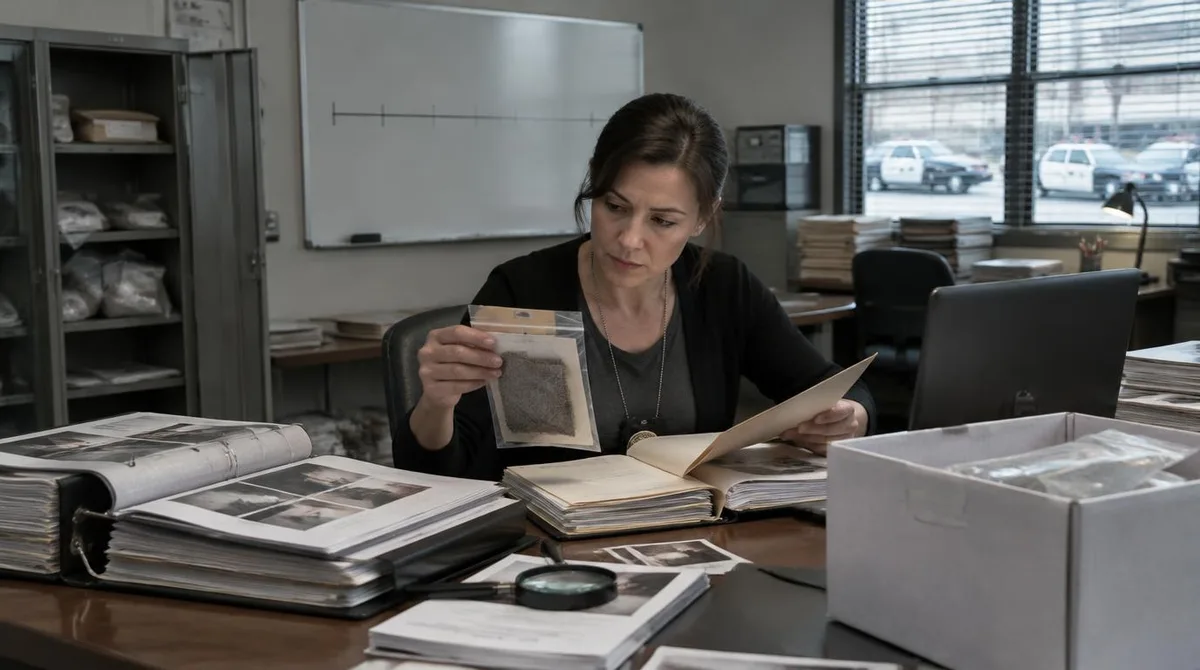
Technology heads the list. Cold case programs have solved a substantial number of violent crime cases, including killings and sexual assaults, per the National Institute of Justice. New lab methods now handle old, damaged, or tiny samples that labs once rejected. A sample once thought useless may now yield a DNA profile. A fresh tip, a re-count of stored evidence, or a database match can reopen a file as well. A second look at the paperwork often starts things off. Reviewers re-read the original reports, list what was collected, and flag items that were never tested.
How do DNA databases and family trees produce a lead?
Police DNA banks such as CODIS match a crime-scene profile only against profiles already on file. That limit keeps many old cases stuck, according to a 2024 review in Forensic Science International: Synergy. Genetic genealogy widens the net. The same review counts hundreds of U.S. cases since the 2018 Golden State Killer arrest. Analysts compare a crime-scene profile to people who shared their own DNA in public databases, then build family trees until a suspect line narrows.
Who does the work, and who helps?
Staffing varies by agency. Some departments run dedicated units; others assign a detective part time and lean on a crime laboratory. Federal help flows through the National Institute of Justice, which builds the field’s knowledge base, opens lab capacity for DNA tests on old evidence, and aids the follow-up work, per the institute. The bench work stays local. State and local labs test the samples, and the investigating agency runs the new leads. Patience is part of the design. Old leads get re-checked before new work starts, because a wrong turn wastes a scarce laboratory slot. Readers following this should also see How hate crime counts are collected, and why underreporting persists.
What happens when a reopened case leads to an arrest?
An arrest restarts the ordinary machinery, and it is never an ending. Investigators document the new proof, prosecutors weigh charges, and a court tests the case like any other. Charges are accusations. The presumption of innocence applies, and the burden of proof stays with the government through trial. The defense can also re-examine decades of case history, so old evidence must hold up in court. What follows is the ordinary path: motions, hearings, and, if a conviction comes at last, a sentence. The age of a case never lowers the bar for proof.
Conclusion: Why old files still matter
Old files matter because evidence ages better than attention does. Stored samples, better lab methods, and public DNA banks keep producing leads after years of silence. The work is patient: re-test the sample, trace the tree, verify the tip, and let the courts do the rest. None of it looks like a screen drama. It reads as re-reading, re-testing, and re-checking, done by small teams against a long clock.