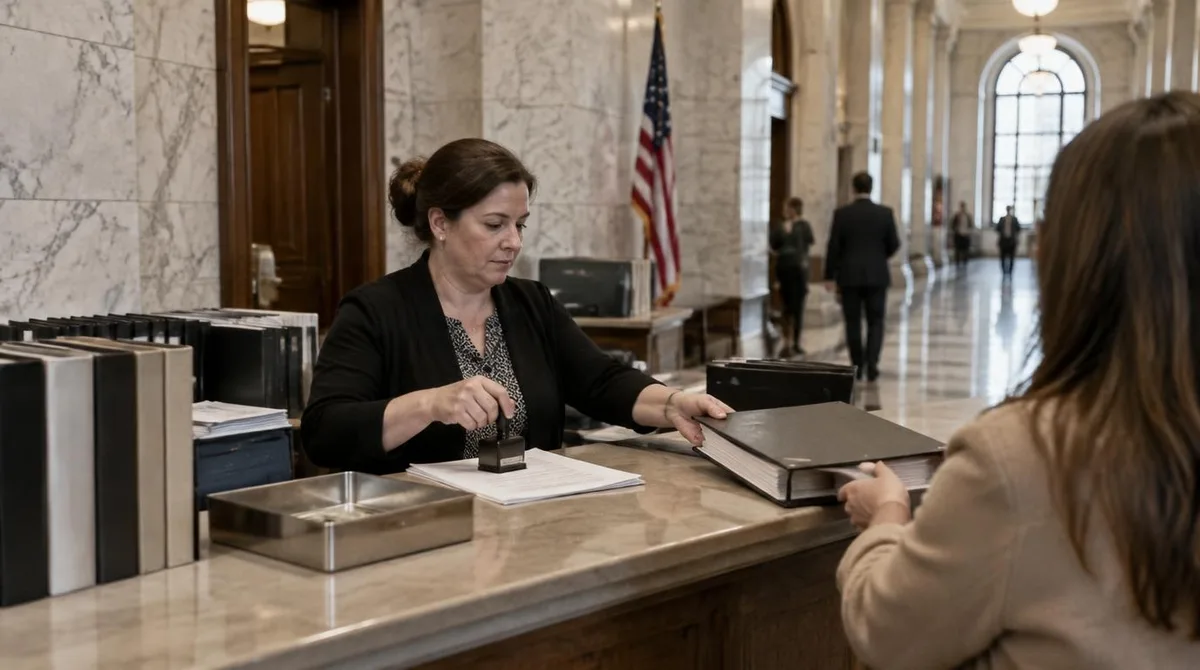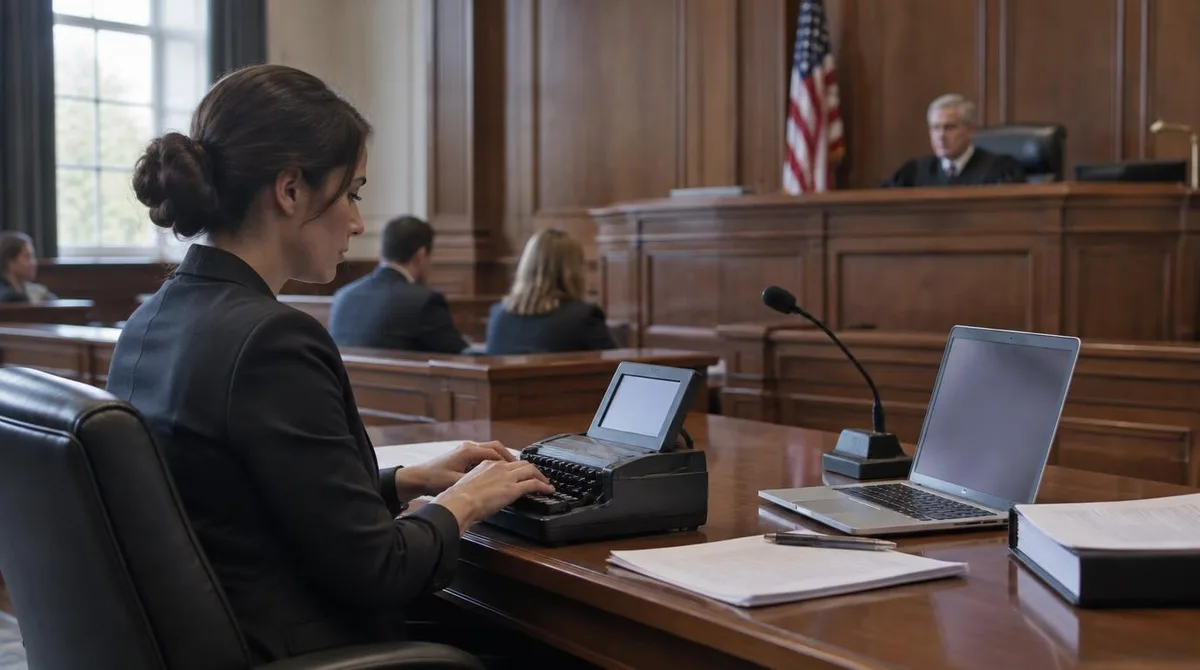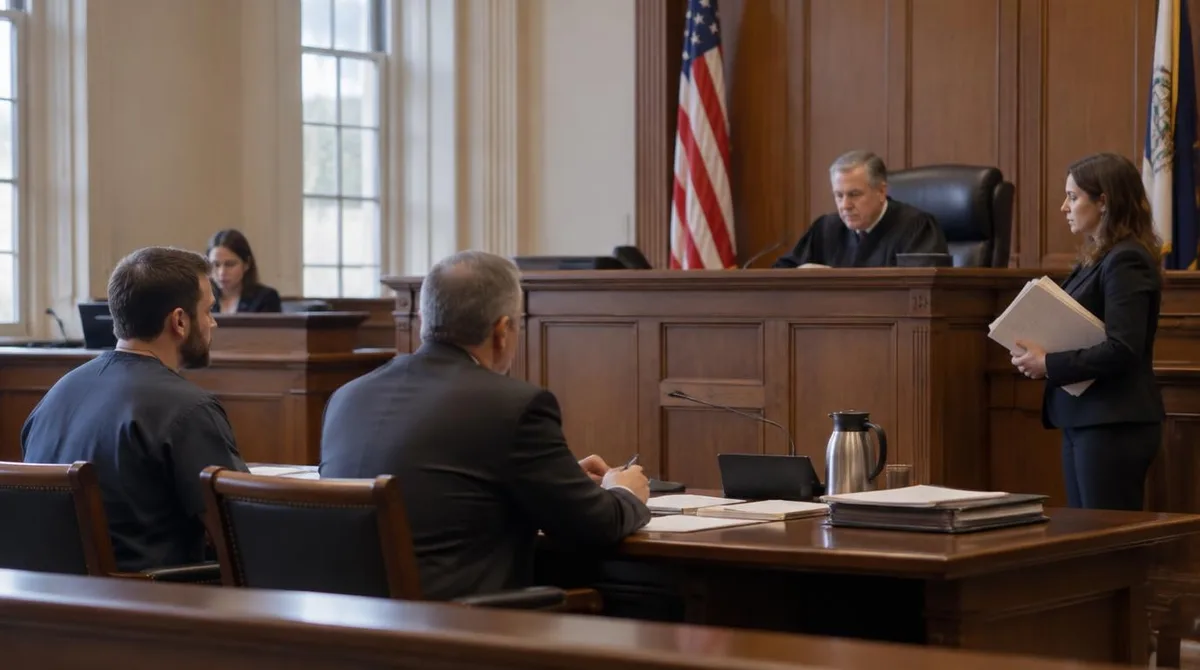
A sentencing hearing is the proceeding where a judge sets the punishment after a guilty plea or a verdict. A probation officer hands the court a presentence report first. Both sides correct its facts. The defendant speaks, and the judge then states the sentence and the reasons behind it.
The hearing ends a case, so the stakes are plain. The order of events is settled, and the federal judiciary describes each part of it in public guidance. The steps matter because a sentence must rest on a record both sides could test.
When the hearing happens
Most federal convictions never reach a trial verdict. More than 90 percent of cases end in a guilty plea rather than a trial, per the judiciary case guide. Even after a plea, the judge usually does not sentence on the spot. The court schedules a later hearing so the probation office can prepare its report.
What happens before the hearing: the report
Once a plea or a verdict lands, a probation officer opens an independent investigation. The officer interviews the defendant about history and background, checks the account with family, friends, and employers, and reviews the offense through police interviews and victim interviews, per the judiciary's presentence guidance.
The work ends in the presentence report. It sums up the offense, criminal history, social history, the advisory guidelines range, and victim statements, and adds the officer's own sentencing recommendation, per the same page. Before the hearing, the defendant, the defense, and the prosecutor review the draft for accuracy. The officer either makes the requested changes or explains why they were not made. This connects to our earlier piece, How the Supreme Court chooses which criminal cases to hear.
What happens in the courtroom, step by step
The hearing itself runs in a settled order, drawn from the judiciary's guidance:
- 1. The court takes up the presentence report, and the probation officer may be called on to answer questions.
- 2. The prosecutor and the defense counsel argue what the sentence should be.
- 3. The judge hears statements from the defendant, and sometimes from victims.
- 4. The judge weighs the report, the trial evidence where there was one, and the arguments of both sides.
- 5. The judge states the sentence and what it covers.
A sentence may include prison time, a fine, and restitution to victims, per the case guide. In most felony cases the report reached the judge before this day. The hearing is where the record gets tested, not built from nothing. Readers following this should also see Supreme Court decides six criminal cases by late January, most unanimously.
What the judge weighs
The inputs are named in advance. During sentencing, the court may consider sentencing guidelines, evidence produced at trial, and information from the pretrial services officer, the U.S. attorney, and the defense attorney, per the case guide. The report itself carries a recommendation, though the judge decides. Statements from the defendant, and sometimes from victims, become part of the record the sentence must fit.
What happens after the sentence
The sentence starts a new set of files. The Bureau of Prisons uses the presentence report to pick a facility and its programs, per the presentence guidance. After release, probation officers use the same report for reentry planning and supervision. The court's probation officers also enforce the conditions the sentence imposes.
The wider path is tracked as data. BJS describes its annual series as covering case processing from investigation through prosecution, sentencing, and imprisonment, and counts the 2022 edition as the 36th in a run that began in 1979, per the BJS report page. The hearing sits at the center of that chain.
Conclusion: why the steps matter
Each step puts a fact where both sides can see it. The report gathers the record, the parties test it, the defendant and the victims speak, and the judge explains the outcome in open court. A sentence that follows those steps carries its reasons with it. The paperwork may be heavy, but it is the part that makes the decision checkable.