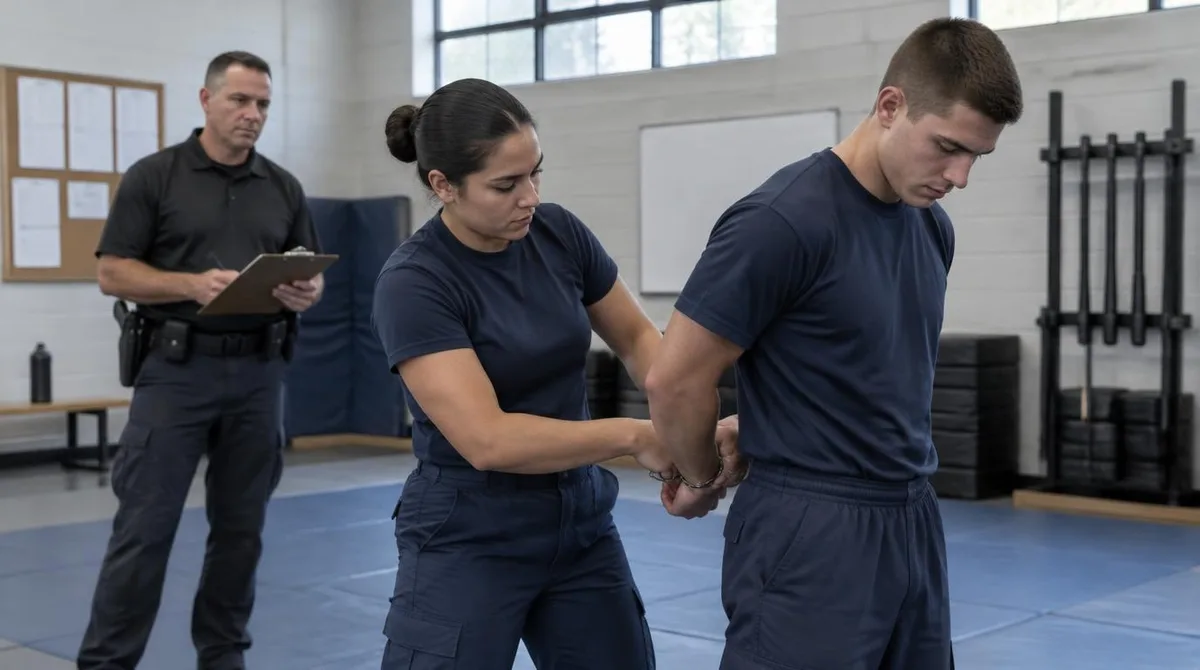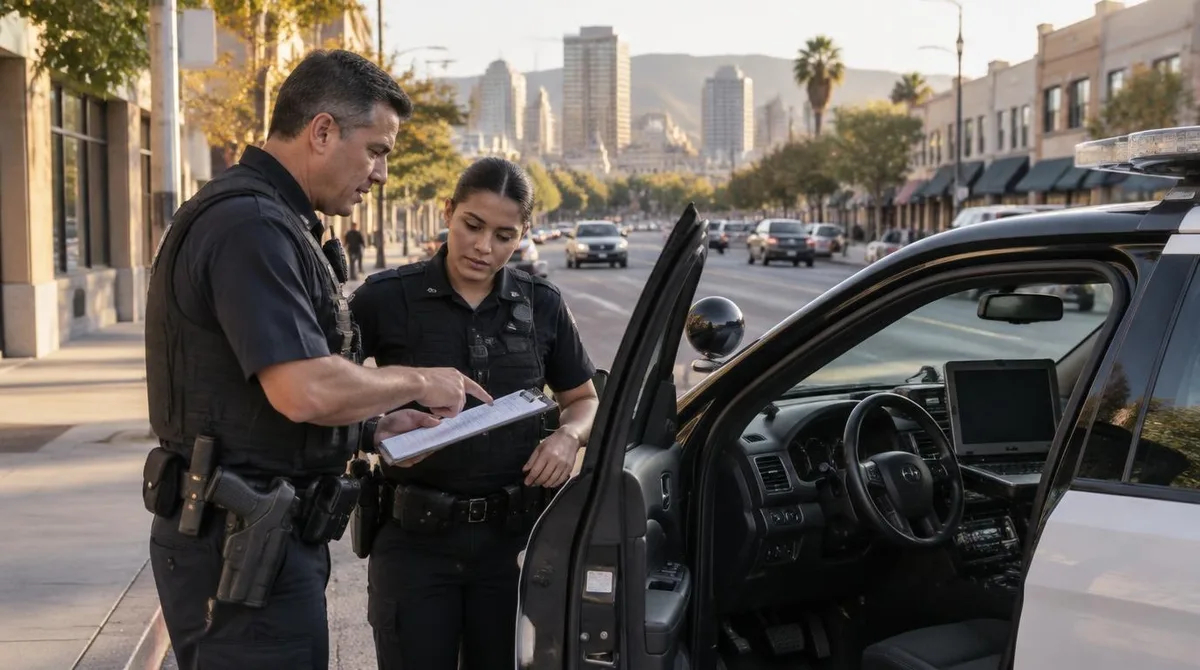
A field training officer is a veteran patrol officer who coaches a new academy graduate. The trainee works real shifts under this officer before any solo assignment. The phase is close to standard across American policing. Eighty-nine percent of police academies required a separate field training in 2022, per the Bureau of Justice Statistics.
The design of field training dates to the 1970s. Its score sheets, coaching habits, and pass rules decide how a department teaches newcomers. Both models rest on one idea: watch the work, score the work, and repeat. The National Policing Institute calls the phase the bridge between the academy and full-duty service. A federal census measures how far the practice reaches. Readers following this should also see How police academy training works, according to federal counts.
Where did field training programs start?
The first program began in San Jose, California, in the 1970s, per the Police Executive Research Forum. Police academies had existed since the early twentieth century. Structured post-academy training had not. The forum credits San Jose with the first field training officer program. Academy graduates were placed on the streets with experienced officers, per its account. The approach then spread to departments nationwide.
How does the first model score a trainee?
The San Jose model is still one of the most used field training frameworks, per the National Policing Institute. A trainee faces a scored checklist each day for weeks. The forum puts the older pattern plainly. Trainees were scored on 31 categories each day of a 14-week program, most often on a one-to-seven scale. A failing score carried weight, and the forum notes that trainees felt it. The Reno department wrote Daily Observation Reports on more than 30 scored guidelines, per the forum.
What does a trainee learn in the field?
The curriculum is the shift itself. A recruit answers calls, writes reports, and applies department policy under supervision. The forum states the aim plainly: a move from the academy to single-officer patrol work. The trainer talks through each call. The trainee writes the report, and the trainer checks it. Small errors get flagged the same day. This connects to our earlier piece, Military police explained: How defense departments police their own ranks, from base patrol to overseas authority.
What is the Police Training Officer model?
The PTO model is a newer alternative. The Reno Police Department and the forum built it for the Justice Department COPS Office. It uses problem-based learning, per the program overview. The plan rests on community policing ideas. It runs in phases: three weeks on non-emergency calls, then three weeks on emergency calls. A mid-term review and a final review close the sequence, per the overview. One field-test agency stretched the plan to 19 weeks.
Does the trainer shape the officer?
Research points that way. The National Policing Institute points to Dallas data. There, complaints of misconduct among new officers tracked back to the FTOs who trained them. It cites a similar pattern in Indianapolis. Recruits of trainers with fewer force incidents took longer to face a first force encounter, per the institute. It calls field training officers mentors and role models, not just teachers of rules.
How common is field training nationwide?
The federal census gives the scale. Eighty-nine percent of academies required a separate field training after basic training in 2022, per the Bureau of Justice Statistics. Twenty-nine percent of those academies oversaw the field training themselves. The census counts field training as its own phase, apart from academy hours. The rule covers the schools that train most new officers entering patrol work.
Conclusion: Who shapes a new officer first?
The field training officer is the last teacher before full authority. One tradition scores a trainee day by day on set forms. The other builds coaching and problem-solving into the same months. The evidence from Dallas and Indianapolis suggests the trainer leaves a mark. The officer who writes a trainee daily report shapes a career as much as any academy class does.