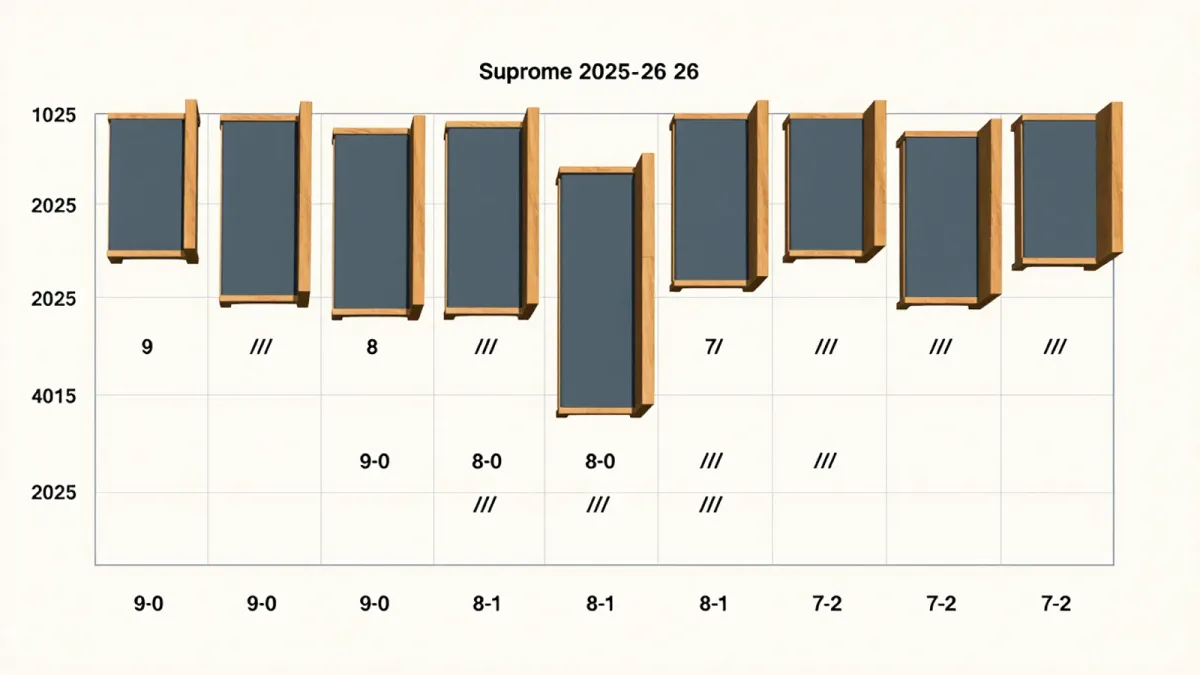
By late January 2026, the Supreme Court had decided six cases with criminal-law implications in its 2025-26 term, and the initial vote in five of the six was 9-0, per SCOTUSblog's mid-term review published in January 2026. The most consequential for defendants, Ellingburg v. United States, decided January 20, 2026, held that restitution imposed under the Mandatory Victim Restitution Act is criminal punishment for purposes of the Constitution's Ex Post Facto Clause.
The holdings summarized here come from the Court's own opinions and published case summaries; this article explains process, not legal advice.
What did Ellingburg actually decide?
The Court reversed the Eighth Circuit, which had treated MVRA restitution as something other than criminal punishment, per the opinion summarized on Cornell LII. The practical effect is procedural: defendants sentenced under the 1996 statute for conduct that predates it may now raise Ex Post Facto challenges that the ruling forecloses no longer. An Ex Post Facto claim argues that a law applied retroactively increases the penalty for earlier conduct.
Restitution here is money a sentencing court orders a defendant to pay identifiable victims. The Court did not erase those orders; it classified them, and the classification opens a constitutional argument. Lower courts now apply Ellingburg to pending cases, and some defendants will move to reopen sentencing under it.
Why so much unanimity so early?
Early-term criminal cases often arrive on narrow procedural questions where the Justices agree on the doctrinal answer even when they disagree elsewhere. Per SCOTUSblog's January 2026 review, the 9-0 pattern in five of six decisions reflected that dynamic: rulings on statutory readings and procedural rules rather than contested constitutional lines.
Unanimity is also a snapshot. Separate concurrences in nominally unanimous cases can signal later fractures, and the term's higher-profile criminal arguments — including firearms cases — remained undecided as of mid-February 2026.
What happens in the cases still pending?
Under the Court's standard calendar, argued cases from the fall and winter are typically decided by the end of June 2026. Parties in undecided cases file supplemental briefs when new decisions touch their questions, and the Court's opinion release days accelerate in the spring. Counsel in criminal cases awaiting rulings plan around that schedule: a holding in one pending case can change the standard applied in hundreds of lower-court proceedings.
How should readers track the rest of the term?
The Court posts every opinion on its own website the day it is issued, and its granted/noted list shows which cases are coming. For criminal-justice readers, the useful habit is the same one that applies to any record: cite the decision by its release date, read the holding at its actual scope, and resist summarizing a 9-0 statutory ruling as if it were a sweeping constitutional one.