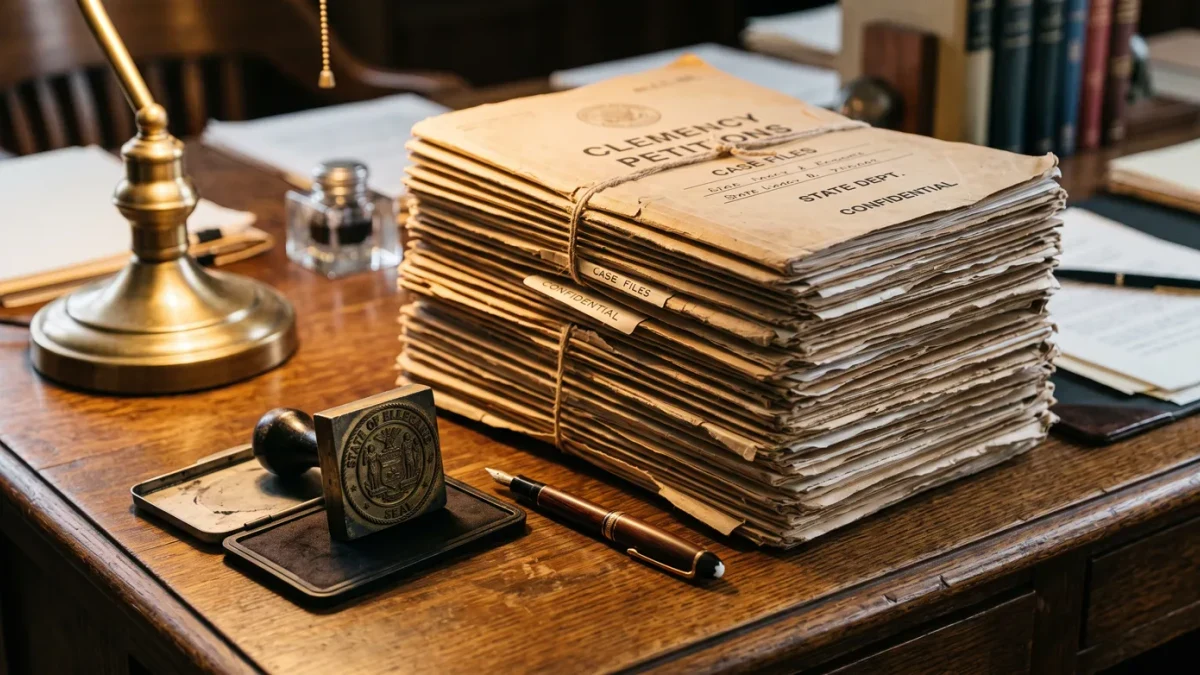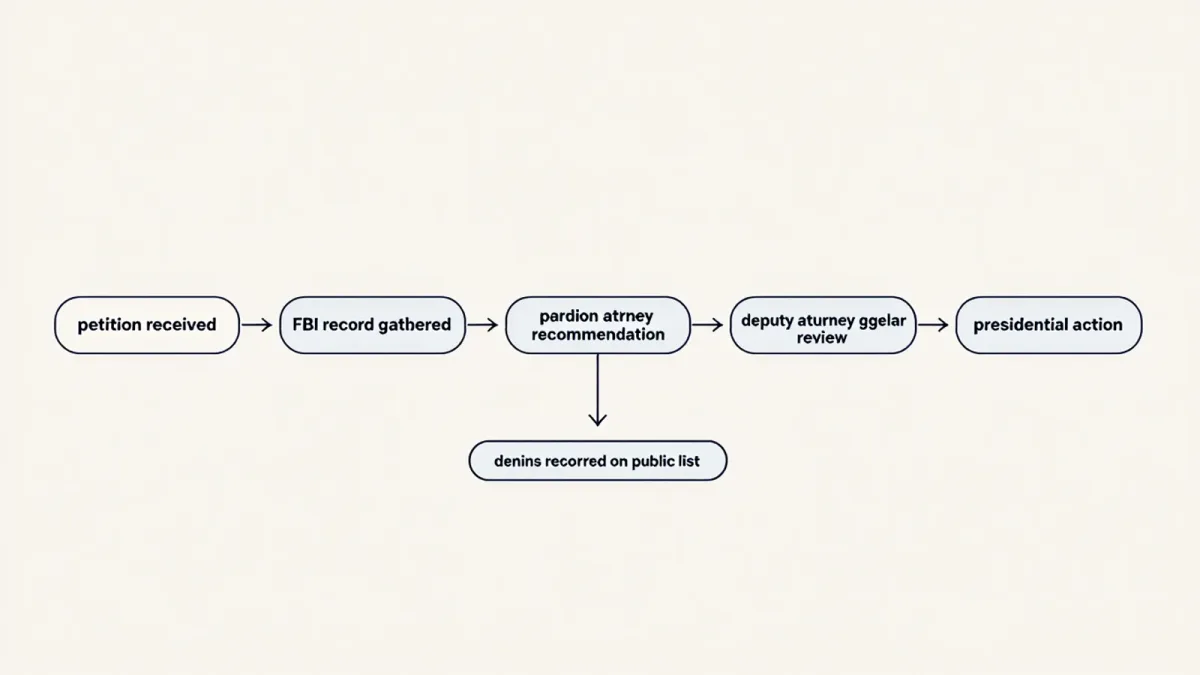
The Justice Department's Office of the Pardon Attorney maintains the authoritative public record of federal clemency, and its published list of grants by President Trump — running from January 2025 into 2026 — shows the year's actions documented in the same way as every prior administration's: dated entries for each pardon and commutation, recorded alongside separate lists of denied applications. The department's own records are the primary source here, and any figure beyond them reported in this article is attributed to the outlet that published it.
Clemency vocabulary is exact and often blurred in coverage: a pardon forgives a conviction's consequences; a commutation reduces a sentence; neither erases the underlying facts of a case, and this article is information, not legal advice.
What do the records show for 2026?
Per the Office of the Pardon Attorney's published grant list, clemency actions continued through 2026 in dated entries, including commutations recorded on January 15, 2026. Per Ballotpedia's tracking of executive clemency, the president issued 17 pardons on July 3, 2026, and per reporting by The New York Times in late July 2026, the department rejected on the order of thousands of clemency applications in the same period — a volume that makes the denial lists, not the grants, the statistically dominant document of the year.
Every grant and denial on those lists concerns a person whose conviction was already final: clemency operates after the courts have concluded, which distinguishes it from every stage covered elsewhere on this site.
How does a clemency petition move through the process?
A federal petitioner applies to the Office of the Pardon Attorney within the Justice Department, which gathers the FBI record, sentencing documents, and post-conviction history, and prepares an investigation summary with a recommendation. Under Justice Department rules, a recommendation goes to the deputy attorney general and then to the White House; the Constitution vests the decision in the president alone, with no judicial review of the choice itself. Published outcomes take one of several forms: a full pardon, a conditional pardon, a commutation of a prison sentence, or a denial recorded in the department's lists.
Timing is the process's soft spot. Rules advise petitioners to wait five years after conviction or release before seeking a pardon, but the Constitution sets no deadline, and modern practice has included grants that bypassed the office's standard sequence entirely — a structural fact about clemency that the records themselves make visible, because actions outside the office's process still appear on the grant list.
What does a pardon actually change?
Per the department's own regulations and published guidance, a pardon releases a person from punishment and restores some civil rights, such as the ability to serve on a federal jury or hold federal office, but it does not expunge the conviction, and federal firearms and employment consequences vary by statute. A commutation leaves the conviction intact and shortens or ends the sentence. These differences matter practically — for record-clearing applications, professional licensing, and immigration consequences — and they are why recipients' attorneys treat the exact form of clemency as the entire question.
What should readers watch in the remainder of 2026?
The grant list and the denial list on the department's pardon pages, which are updated as actions occur, and Congress's oversight record, since clemency at this volume draws documented scrutiny. The habit that serves readers best is the one this site applies to court records: quote the entry, the date, and the form of clemency — and attribute any characterization beyond that to the person who made it.