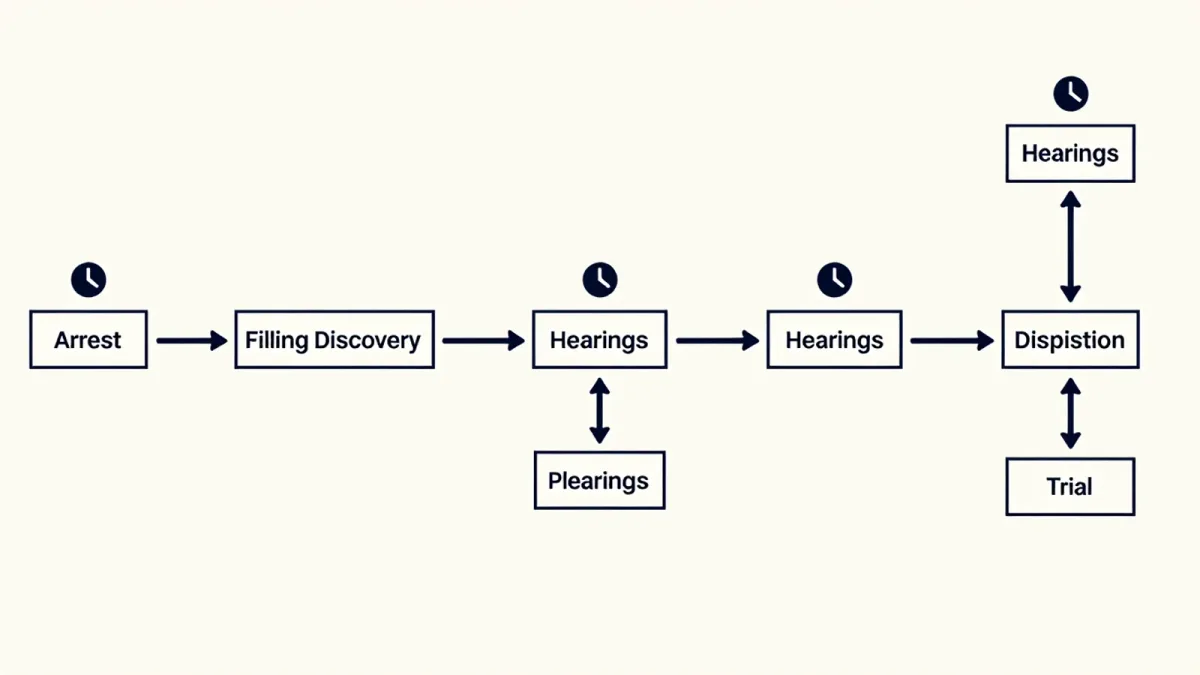
Case management software is the system of record that prosecutors and public defenders use to track every case from filing to disposition, and it matters largely because so few cases reach trial: per U.S. Sentencing Commission statistics, more than 95 percent of federal convictions in recent years have come from guilty pleas. A docket built on pleas and scheduled hearings is a docket built on deadlines, and deadlines are what this software exists to manage.
The tools differ between prosecution and defense, but the problem is the same: enormous volume, strict procedural clocks and evidence that arrives in many formats. How well an office handles that problem shapes whether cases move on time and whether people are held in jail longer than the law intends.
What does a case management system track?
The core objects are people, charges, events and evidence. The system records each defendant, each charge and its status, every hearing date, and every document or file associated with the case. Calendar functions calculate statutory deadlines — speedy trial clocks, discovery schedules, filing dates — from entered events. Supervisors use the same data for workload: how many cases each attorney carries, how old each case is, where the bottlenecks sit.
Prosecution systems typically integrate with the courts' electronic filing and with police records exports, so charges and reports flow in without retyping. Defense systems, including tools built for public defender offices, center on client records, conflict checking and discovery review, since the defense receives evidence rather than originating it. Both flavors replace what were, within living memory, paper case folders and wall calendars.
Why does deadlines software matter in a plea system?
Because most cases resolve by negotiation, the leverage in the system is time. A defendant held in pretrial detention loses leverage with every passing week; a prosecutor with a slow docket loses trial dates and witnesses. Speedy trial rules set outer limits, and missing them can end a prosecution. The software's deadline calculations are what keep a high-volume office inside those limits.
The risks are equally mechanical. A mis-entered hearing date can produce a missed speedy trial clock; a discovery item logged into the wrong case can go unreviewed. Audits and appellate opinions on discovery failures have repeatedly found that breakdowns trace to information handling — evidence that existed but was not matched to the case where it mattered. The Supreme Court's Brady doctrine requires prosecutors to disclose favorable evidence; compliance at scale is an information management problem before it is a legal one.
How does the software handle discovery volume?
Modern criminal discovery includes hours of body camera video, gigabytes of phone extractions and thousands of pages of records. Case management platforms increasingly embed review modules: files are indexed, deduplicated and searchable, with annotation and production-tracking features that log what was sent to whom and when. Prosecutors use the same tools to confirm completeness; defense counsel use them to triage what to examine first.
The asymmetry is structural. Prosecution systems ingest evidence automatically from police systems, while defense systems depend on what the prosecution produces. The software cannot fix an incomplete production; it can only record what arrived, which is why production logs have become evidence in their own right when discovery disputes reach a judge.
| Function | Prosecution systems | Defense systems |
|---|---|---|
| Deadline tracking | Speedy trial clocks, filing dates | Response deadlines, motion calendars |
| Evidence handling | Ingest from police and lab feeds | Review of produced discovery |
| Workload data | Attorney caseloads, case ages | Client counts, conflict screening |
| Compliance record | Discovery production logs | Records of requests made |
How did offices work before these systems?
The contrast clarifies what changed. Paper dockets relied on wall calendars, index cards and a clerk's memory; discovery was tracked by initials on a routing sheet; a supervisor's view of office workload meant counting closed folders at year's end. Cases could age silently because nothing flagged them. Scholars studying court delay in the late twentieth century documented chronic drift between scheduled and actual events, precisely the problem deadline-driven software later addressed.
The transition was uneven. Large prosecution offices adopted integrated systems decades ago; many defender organizations, funded less steadily, adopted later and thinner. That adoption gap is itself documented: national studies of indigent defense repeatedly note that data systems lagged caseload growth, so the offices with the largest volumes often had the least visibility into them. Any fair assessment of what the software contributes has to include who got it and who did not.
What are the documented limits?
Case management software organizes information; it does not verify it. Data quality depends on entry, and entry depends on workload. Studies of public defense workloads, including those compiled by the American Bar Association and state commissions, document caseloads far above recommended standards in many jurisdictions; software that assumes an attorney can read what the system surfaces will fail silently when nobody has time to look. Underfunded defender offices often run on older tools or none at all, which means the prosecution's data advantage compounds.
Vendor configurations raise quieter questions. Retention of case data, access logging and export rights vary by contract, and offices that change vendors must migrate their institutional memory. A case management system is a long-term records commitment made under short-term procurement pressure.
What should a reader take from the software's role?
The tools are neither the cause nor the cure of the system's pathologies, but they record both. When defense counsel later must reconstruct what the prosecution knew and when, the production logs in these systems are often the decisive documents, which is a role their designers did not primarily envision. When a jurisdiction publishes case age, dismissal rates or discovery sanction data, the numbers come from systems like these, and their accuracy is only as good as the offices maintaining them. The Administrative Office of the U.S. Courts, which operates the federal judiciary's own case management systems, publishes national caseload statistics from its data, and those statistics are the best public example of what disciplined case data can show: national trends in caseloads, case ages and outcomes, comparable across districts because the underlying entries follow shared rules.