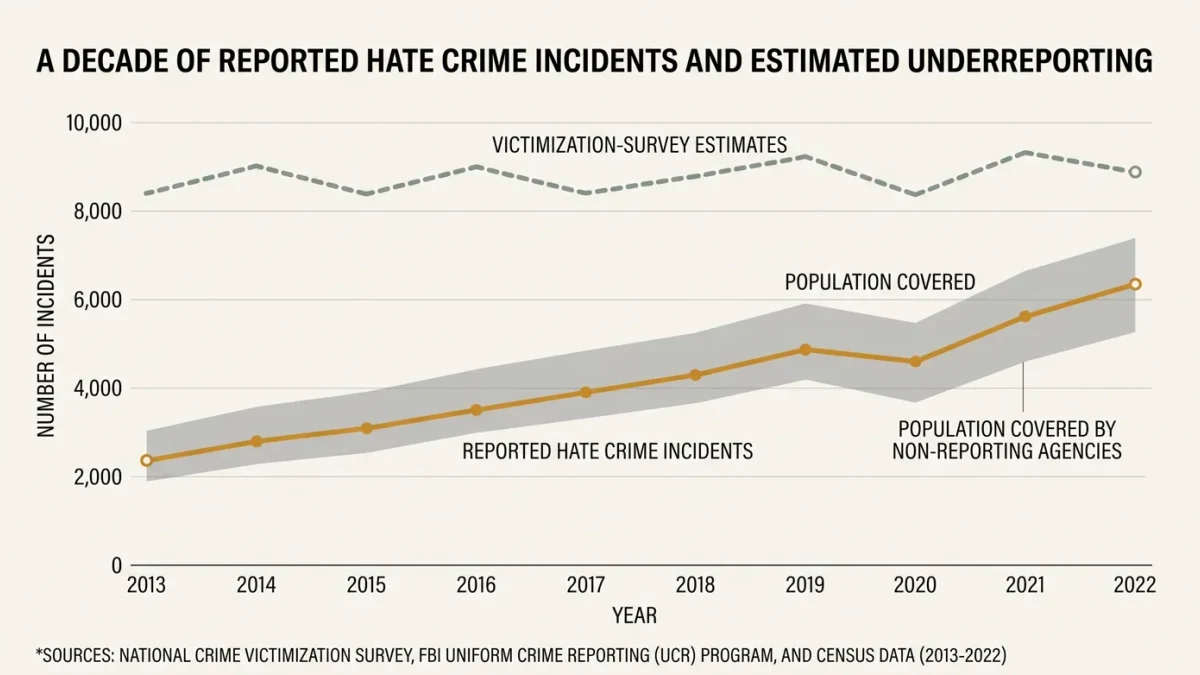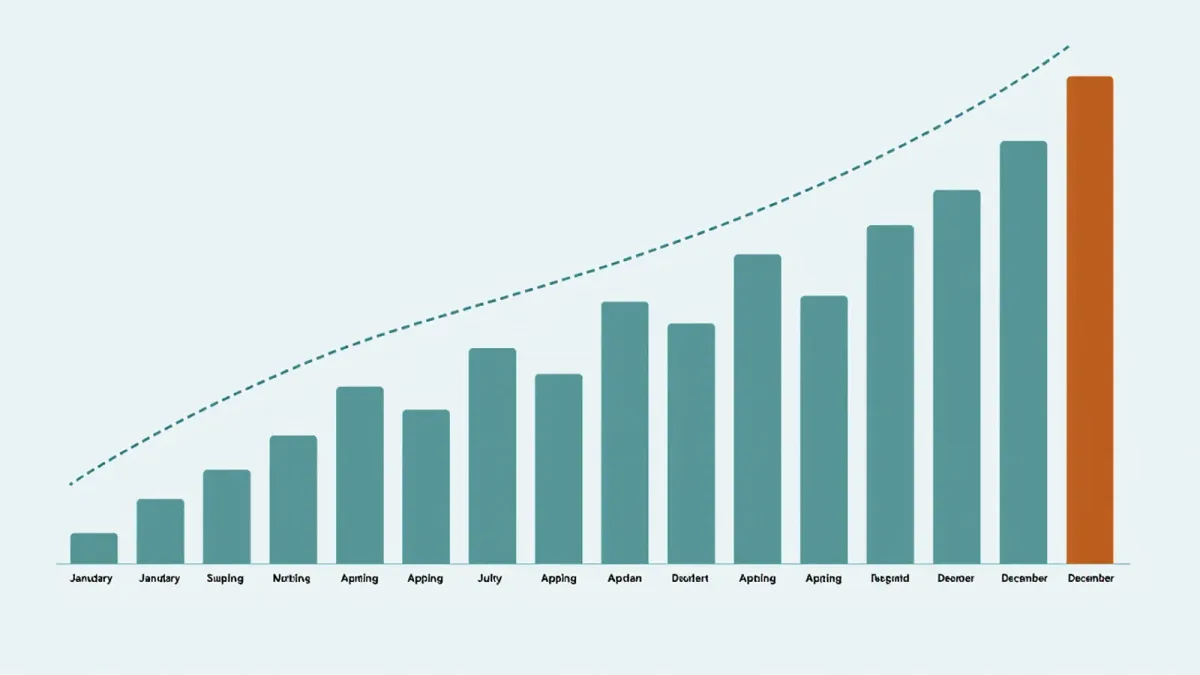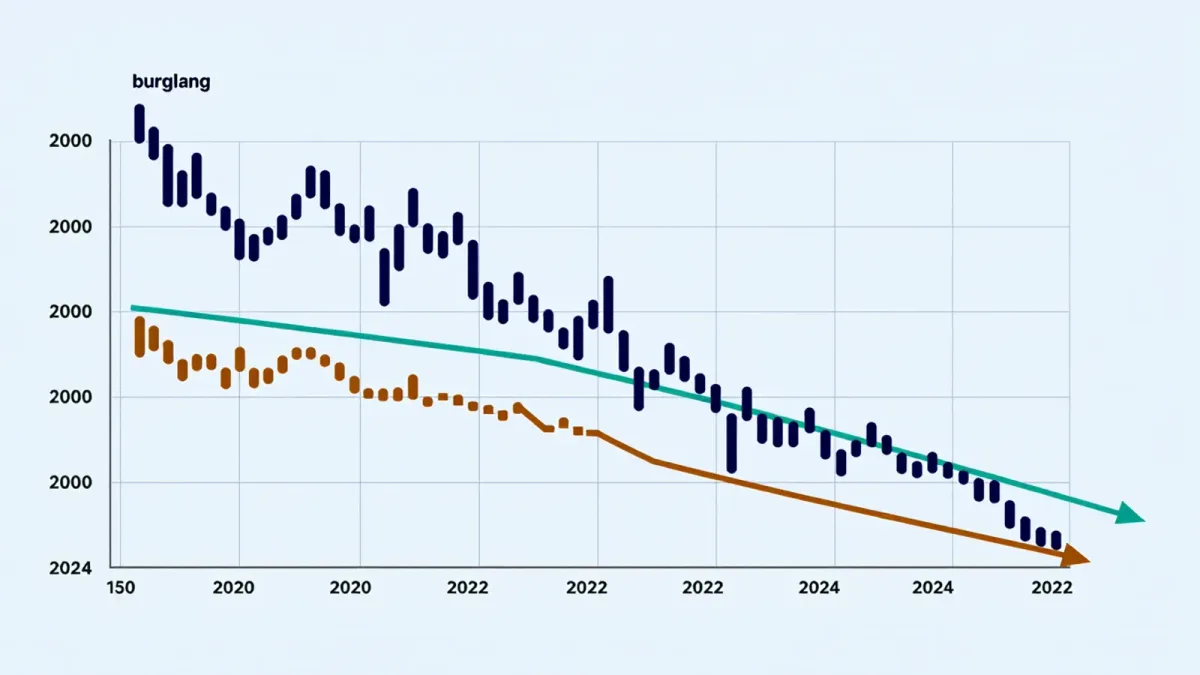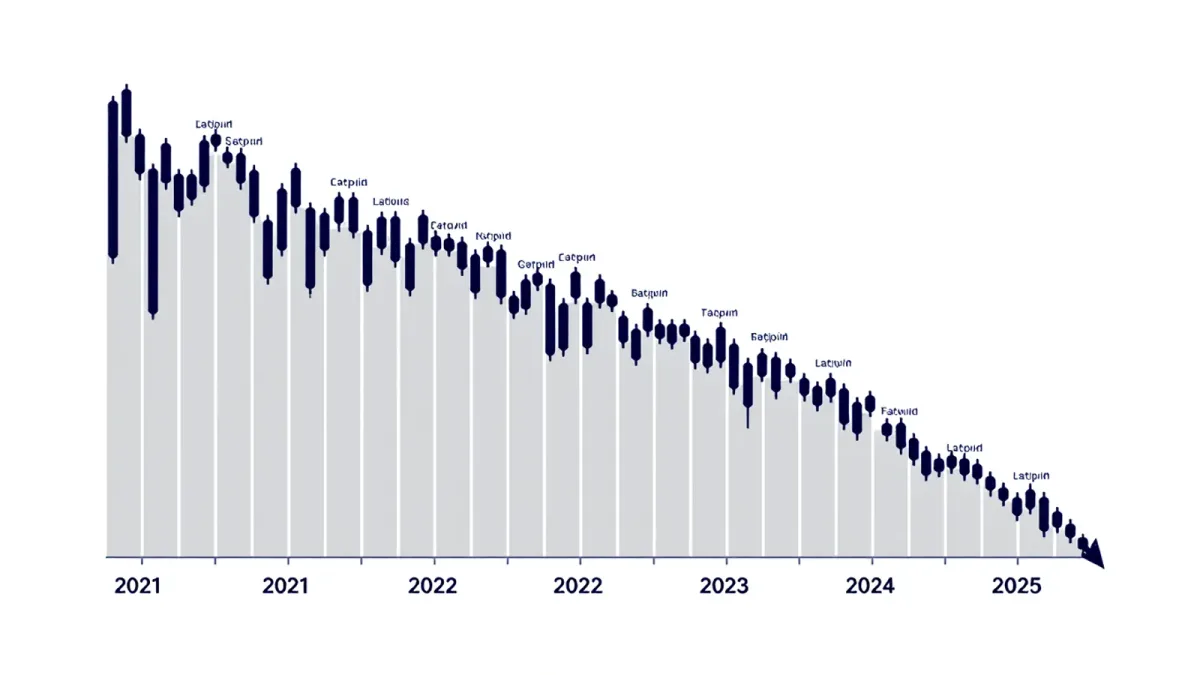
The 2023-2024 crime declines were large and real: per FBI published data, recorded murder fell roughly 12 percent in 2023 and about 14 percent further in 2024, with violent crime down in both years, and BJS's victimization survey showed property and violent declines moving in the same direction by 2024. What the data does not show is a single cause. The drops were national in scope, uneven across cities, and larger than any one policy change could plausibly explain — which is why the confident explanations that attend any crime decline tend not to survive contact with the full record.
This site publishes information, not legal advice.
What exactly did the 2023-2024 data show?
Per the FBI's published tables, the declines were broad but not uniform. Murder fell faster than other violent offenses, reaching below its pre-2020 peak levels; aggravated assault and robbery declined more modestly; motor vehicle theft, after its 2022-2023 spike, turned downward in 2024. Per BJS's National Crime Victimization Survey, which counts unreported offenses, violent victimization leveled off and property victimization fell through 2024 — the survey and police records agreeing on direction after diverging in 2022 and 2023.
The city-level variation is the analytically important fact. Some large cities recorded murder declines above 30 percent across the two years while others in the same regions recorded increases, per the FBI's own city tables. A national story with local scatter of that width rules out any explanation that treats the country as a single case.
Why does one cause never carry the whole decline?
Three structural reasons, visible in any historical comparison. First, scale: crime moves by millions of incidents, and no single program or policy operates at that scale simultaneously everywhere. Second, timing: the 2023-2024 declines began at different points in different places, while single-cause theories predict synchrony. Third, precedent: the long 1990s-2000s decline unfolded under wildly different policies across jurisdictions, which is why the scholarly literature on that era — summarized in multi-author assessments of the many proposed explanations — concluded that dozens of factors contributed and none dominated.
The same logic applies to the recent decline. Per the published analyses of research groups tracking monthly city data, the 2023-2024 murder decline ran across jurisdictions with different policing strategies, different state laws, and different economic conditions — a pattern incompatible with crediting any one of them.
Which popular explanations fail the checks?
- Single-policy credit: jurisdictions that adopted a given strategy and jurisdictions that did not both declined, in roughly overlapping ranges.
- Demographic shifts: age structures moved too slowly over two years to produce a double-digit murder decline.
- Economy-first accounts: the decline overlapped with both good and weak local economic indicators, and property crime fell faster than violence in some places and slower in others.
- Enforcement-volume claims: arrests and incarceration levels did not rise in step with the decline, per the published federal corrections data.
What do careful analysts credit instead?
The honest answer is a portfolio, weighted differently by place. Criminologists tracking the period point to the fading of the specific drivers of the 2020-2022 disruption — pandemic-era strain, the withdrawal of routine activity from public space, and, in some cities, strained police-community relations after 2020 — reversing as institutions resumed ordinary operation. Local factors did the local work: in some cities, violence-intervention programs expanded; in others, detective staffing recovered; in others still, the decline tracked no documented change at all. Per the published city-level analyses, the intervention-heavy cities did not systematically outperform the intervention-light ones over these two years, which counsels modesty about every program claim.
This is not the same as saying nothing worked. It says the data for this window cannot separate the candidates — and that researchers who tried, in the published multi-city analyses through 2025, mostly declined to.
What did the pandemic disruption fade from?
Any account of the 2023-2024 decline has to explain the 2020-2022 rise first, because the decline is largely a return. The published analyses of that disruption converge on a bundle: schools and services closed, public space emptied and then refilled unevenly, policing was redirected and, in some cities, reduced in proactive work, and the institutions that normally interrupt disputes — family, work, church, after-school programs — operated at reduced capacity. None of these alone produced the 2020 murder increase; together they are the only account that fits its sudden onset and its national breadth.
The decline then reads as that bundle unwinding at different speeds in different places. Cities where the 2020 rise was steepest tended to record the largest 2023-2024 declines, per the published monthly comparisons, which is the pattern a regression-to-baseline account predicts and single-cause theories do not.
What would good evidence of a real cause look like?
It would show the effect arriving when the cause arrived, in the places the cause operated, at roughly the magnitude claimed, and it would survive comparison with places that lacked the cause. Those are demanding tests, and per the published evaluation literature they are exactly what most program evaluations cannot yet meet for this period: rollout timing rarely isolates from other changes, comparison cities are imperfect matches, and the windows are short. Researchers who published multi-city analyses through 2025 generally reported directional evidence and declined causal language. That restraint is a feature of honest measurement, not a gap in it — and a reader who hears a confident single-cause story about these years is hearing a claim the published data does not yet support.
How should a reader evaluate the next decline story?
Apply the same three checks each time. Does the explanation predict the timing and geography — would it have predicted the decline before it happened, in the places it happened? Does it survive the comparison cases — places without the claimed cause that declined anyway? And does it fit the offense mix — an explanation of murder that ignores motor vehicle theft, or vice versa, is explaining less than it claims. Per FBI published data, the 2023-2024 decline passed through all three filters for exactly none of its popular single causes. The number moved; the honest account of why remains a portfolio, and the burden of proof stays with the next confident theory.