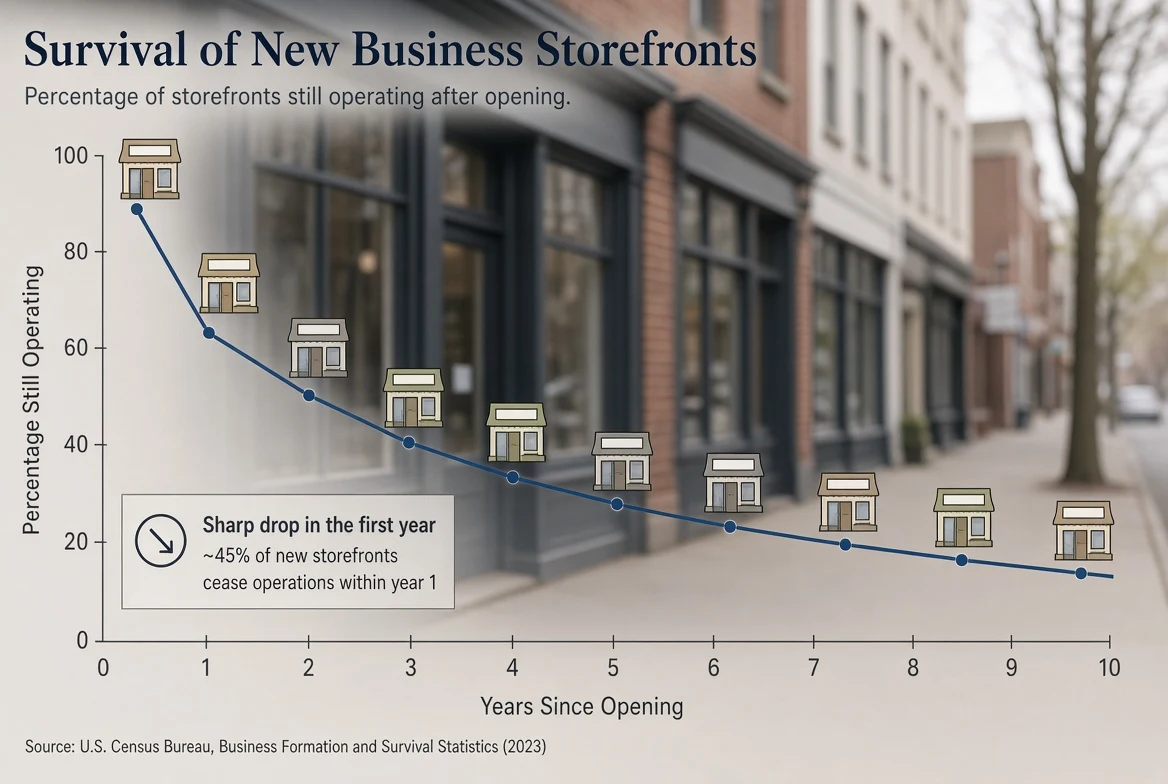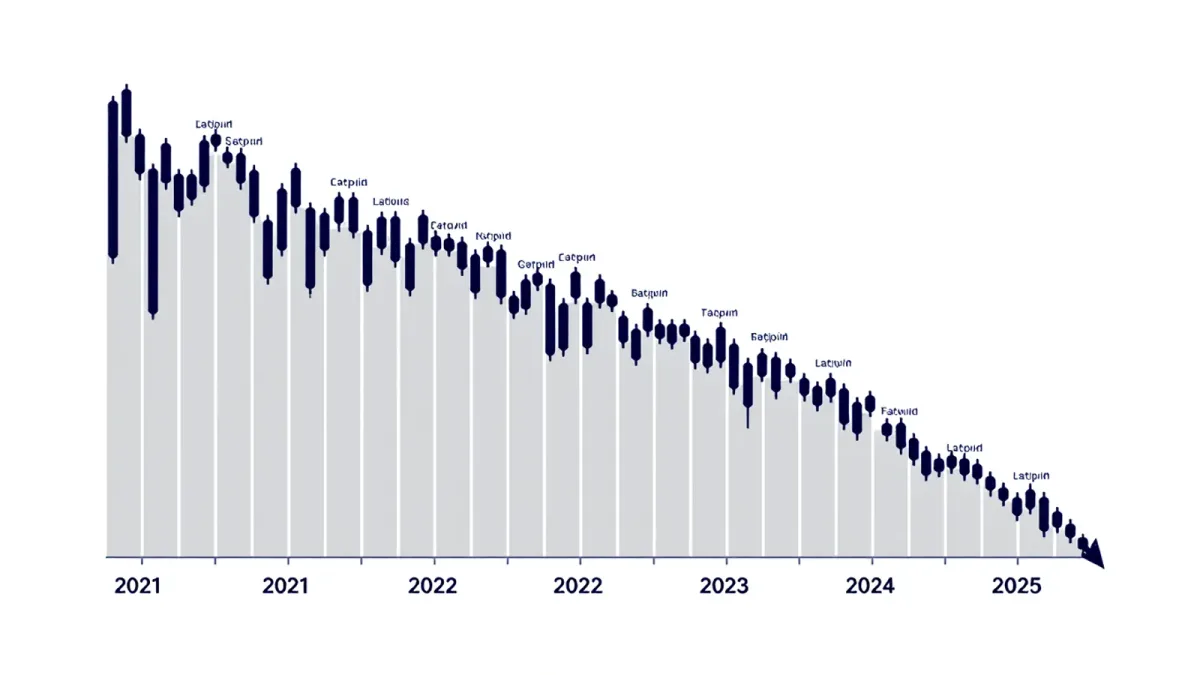
Homicide clearance has fallen far enough that unsolved cases are now the statistical norm in much of the country: per FBI published data, the murder clearance rate stood near 50 percent in recent years, down from more than 90 percent in the mid-1960s, and analysts at the Murder Accountability Project estimate that thousands of killings each year — roughly 8,000 in some recent counts across several years — add to a national backlog of unsolved homicides approaching a quarter million cases.
Every figure here comes from published federal data and named analyses; this site publishes information, not legal advice.
How quickly does a homicide case go cold?
The published research is blunt about time. Studies of homicide investigations, including work cited by the Bureau of Justice Assistance's cold-case initiative, find that the large majority of homicides are solved quickly or not at all: a substantial share of clearances come within the first days, and cases still unsolved after the first weeks clear at a small fraction of that rate. The first 72 hours — witnesses reached before memories blur, scenes processed before evidence degrades, tips logged while they are fresh — carry disproportionate weight in the outcome.
The "cold case" label is itself administrative, not forensic. Departments designate it differently — some after one year, some after all leads are exhausted — so national cold-case counts are estimates. Per the Murder Accountability Project's published methodology, its unsolved totals come from subtracting cleared offenses from recorded offenses across the FBI's historical files, which makes them the most complete public estimate available and still an approximation.
Which cases are most likely to go unsolved?
The clearance gap is unevenly distributed, and the published record identifies the fault lines. Cases with victims who are young men killed in circumstances without witnesses clear less often than cases with domestic connections or cooperative witnesses. Per FBI data and the researchers who analyze it, homicides with Black and Hispanic male victims clear at lower rates than those with white victims, a gap the literature attributes to witness reluctance rooted in distrust, resource allocation across neighborhoods, and the circumstances of the killings — not to any single cause.
Geography is the other axis. Clearance rates vary enormously across departments of similar size, from above 80 percent to below 40 in some published city comparisons, and small agencies with occasional homicides clear less often than departments that investigate them weekly. A victim's odds that the case is solved depend substantially on which side of a city or state line the shooting happens.
What does the data say about why cases fail?
- Witness non-cooperation: the reason most often cited in studies of unsolved urban homicides, tied to fear and distrust rather than indifference.
- Resource load: detective caseloads in high-volume departments regularly exceed the ratio the investigative literature associates with thorough work.
- Evidence limits: ballistic and DNA matches depend on database hits and lab turnaround, both documented bottlenecks in federal reviews.
- Early missteps: studies of unsolved cases repeatedly find degraded scenes and delayed canvasses in the first days.
What happens to cases that go cold?
Administratively, they stay open; American jurisdictions treat homicide as having no statute of limitations, so an unsolved murder remains indefinitely investigable. Practically, cold cases move into dedicated units where they exist. Per Bureau of Justice Assistance published program data, the number of dedicated cold-case units grew substantially from the 2000s onward, aided by DNA retro-testing programs and forensic genealogy, which since the late 2010s has produced a wave of arrests in decades-old killings.
The arithmetic of the backlog limits what even successful units can do: with thousands of cases added each year against a few hundred cold-case clearances nationally, per the published estimates, the backlog has grown faster than units have reduced it.
What do families of unsolved cases do while cases sit?
The published record describes a parallel civic infrastructure. Advocacy organizations, including Project: Cold Case and the Murder Accountability Project, publish databases and family-support resources precisely to keep individual files visible where the system's aggregate numbers bury them. Per the Bureau of Justice Assistance's program publications, families frequently learn case status only by calling detectives, and departments with structured family-notification protocols report better cooperation outcomes in reopened cases.
The human stakes sharpen the measurement ones. A clearance rate is a department statistic, but a cold case is a specific family's open wound, and the data gap between the two — thousands of files, individually named, collectively uncounted — is what the national numbers most consistently fail to show.
What did the genetic genealogy wave change?
Since the late 2010s, investigative genetic genealogy has produced a documented string of arrests in killings decades old, several of them among the most famous unsolved cases in the country. Per published law-enforcement announcements and Justice Department commentary through 2025, the technique relies on consumer DNA databases and has prompted ongoing policy debate about privacy limits, with several states adding statutory guardrails. Its clearance yield remains small relative to the backlog, but it demonstrated that "cold" is not "closed" — a category of previously hopeless file became solvable on a timeline no one had planned for.
The demographic gap also shapes families' experience of the system: per the published analyses cited above, communities where clearance is lowest are those where unsolved loss is most concentrated, so the same households bear both the original violence and the institutional silence that follows it.
Can clearance rates be improved without more money?
The research suggests process matters as much as budget. Studies comparing departments find that early and sustained witness contact, structured tip management, and rapid detective response predict clearance even at constant staffing levels. Per the Bureau of Justice Assistance's published guidance, case-review protocols that re-examine unsolved files at fixed intervals outperform passive waiting for new evidence. None of this erases the structural finding: at a national clearance rate near 50 percent, the country's default outcome for homicide — the offense the data shows is the least likely of all major crimes to go unsolved — is that no one is ever held to account in court. That is the documented baseline, and every claim about crime policy should be read against it.