On May 4, 2023, a federal jury in Washington convicted four leaders of the Proud Boys — national chairman Enrique Tarrio, and members Joe Biggs, Ethan Nordean, and Zachary Rehl — of seditious conspiracy for their roles in the January 6, 2021, attack on the Capitol. A fifth defendant, Dominic Pezzola, was acquitted of seditious conspiracy but convicted of several other counts, including assaulting an officer. Judge Timothy J. Kelly of the District of Columbia federal court sentenced Tarrio to 22 years in prison on September 5, 2023, at that date the longest sentence in any Capitol attack case.
The verdicts, months after the Oath Keepers convictions, made the Proud Boys case the second completed test of a rarely used Civil War-era statute — and a harder one, because the alleged agreement was largely proved through encrypted messages rather than a visible paramilitary operation. This article publishes information, not legal advice.
What made the Proud Boys prosecution different?
The government's theory was an agreement to oppose by force the transfer of presidential power. Unlike the Oath Keepers case, where prosecutors pointed to staged firearms at Virginia hotels, the Proud Boys proof centered on communications: encrypted chats among the defendants in the weeks after the 2020 election, in which leaders reacted to the result with escalating language about conflict and discussed plans for January 6, per the trial record. Prosecutors argued the group's march toward the Capitol, its confrontation with police lines, and the breach that followed were the execution of that agreement.
A notable complication: Tarrio was not in Washington on January 6. He had been arrested on January 4, 2021, in a separate case involving the burning of a church banner, and was ordered out of the city. His conviction shows how conspiracy law reaches conduct before and after the day itself — the charge attaches to the agreement and to acts in furtherance of it, not to physical presence.
How did the jury split, and why does the split matter?
The jury convicted Tarrio, Biggs, Nordean, and Rehl on the seditious conspiracy count and on related obstruction counts, and deadlocked on a second seditious conspiracy count tied to a December 2020 event. Pezzola, a member who broke a Senate wing window with a stolen police riot shield, was acquitted of seditious conspiracy and convicted of assault, rioting, and destruction-of-property offenses. The same jury thus recorded two answers at once: leadership liability for the plan, and individual liability for conduct.
That pattern is the ordinary grammar of multi-defendant conspiracy trials. The four convicted leaders figured throughout the communications the government introduced; Pezzola's documented conduct was violent, but the record tying him to the pre-January 6 agreement was thinner. Jurors were not asked whether the attack was an attack — they were asked who had joined which agreement, beyond a reasonable doubt.
What did the sentencings establish?
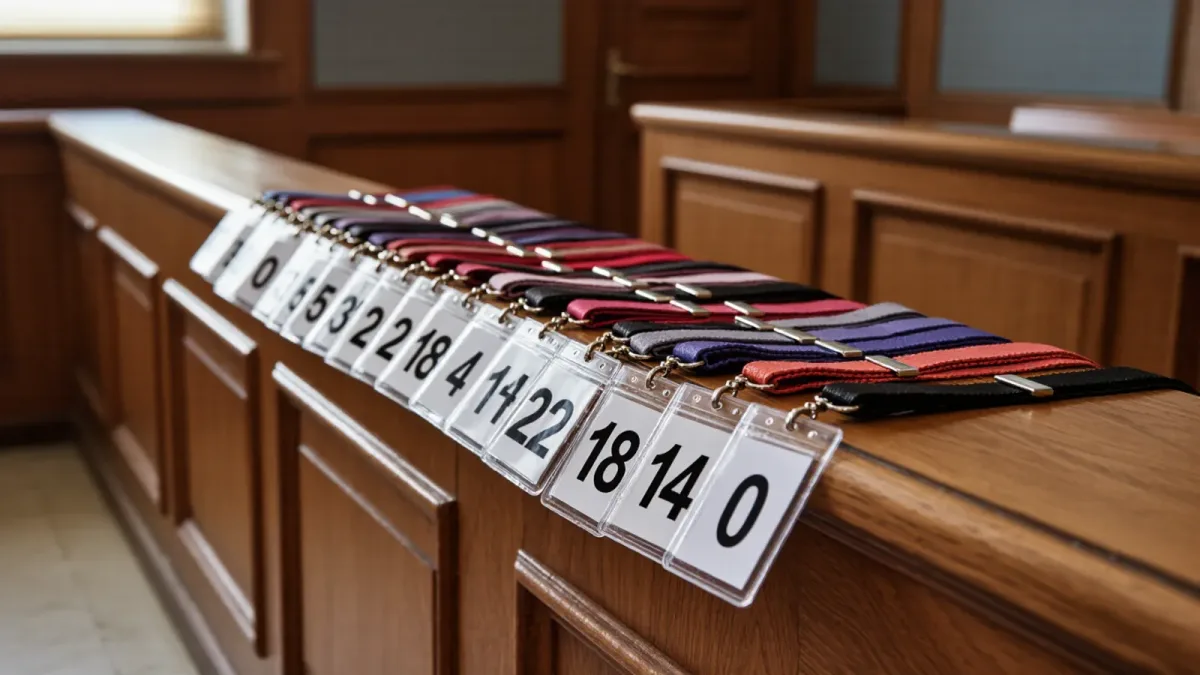
Judge Kelly's sentences ran down the hierarchy: 22 years for Tarrio, 18 for Nordean, 17 for Biggs, 15 for Rehl, and 10 years for Pezzola, imposed in August and September 2023. The court applied a terrorism enhancement to the leaders, finding the conduct sought to influence government conduct by intimidation or force, and adjusted terms for each defendant's documented role — Tarrio's leadership, Nordean and Biggs's organizing, Rehl's participation and statements. The 22-year term roughly doubled the Oath Keepers founder's sentence and set the outer marker of the January 6 caseload.
The spread between the leaders' terms and Pezzola's illustrates how federal sentencing prices roles, not headlines: the same day produced, in the court's accounting, an architect's sentence and a participant's, differentiated by the communications record.
What happened after the sentences?
The case continued into appeals, and then into clemency. In January 2025, President Trump granted full, unconditional pardons to Tarrio, Biggs, Nordean, Rehl, Pezzola, and other January 6 defendants, per the pardon paperwork the Justice Department released, ending their custody. The pardons ended the punishment but left the jury's findings and the trial record intact and public.
What the verdicts meant, on the record: that seditious conspiracy could be proved twice in thirteen months against two different organizations, with a statute that had gone nearly unused for decades; that encrypted planning messages could carry the government's burden; and that juries would separate leaders from followers even inside a single organization. Those are findings about how the justice system works, and they stand in the record regardless of what clemency did afterward.
How was the trial fought, and how long did it take?
The trial, which opened in December 2022 and ran for months, was among the longest in the January 6 docket. The defense attacked the encrypted messages as bluster and drunken talk rather than operational planning, and argued the group had no plan to enter the Capitol or halt certification. Prosecutors walked jurors through the messages chronologically, showing escalation from grievance to mobilization: travel arrangements, leadership roles assigned, and instructions communicated on the day itself. The record also included what happened after — deletions of accounts and messages in the investigation's aftermath, which prosecutors argued showed consciousness of guilt and the court allowed the jury to weigh. None of this was exotic evidence. It was the ordinary grammar of a conspiracy case: agreement proved by communications, execution proved by conduct, and each defendant's liability measured against his own documented role in both.
What did the verdict form record, precisely?
The paperwork is worth reading as an artifact. Jurors returned guilty verdicts on seditious conspiracy for the four leaders, guilty on obstruction of an official proceeding and related counts across the group, and a not-guilty answer on seditious conspiracy for Pezzola — with acquittals on the counts tied to the window he broke being distinguished from the counts about the plan. A hung jury on a December 2020 seditious conspiracy count against the leaders left that question unanswered. The form shows a jury following instructions literally: answering each theory, for each man, on its own evidence. That granularity is what makes the case useful years later — it preserves the difference between what jurors believed about the organization and what they believed about each individual member, in writing, on one document.