Redaction software blurs faces, tracks objects and mutes selected audio in body camera and surveillance video before it is released to the public or handed to the courts, and its workload is set partly by law: California, for example, has required agencies to release footage of incidents involving weapon discharges or serious force within 45 days since its 2018 transparency statute took effect. Meeting a deadline like that across hours of video is why agencies adopted automation.
What the software actually does, how much it can be trusted to do alone, and where its documented limits sit are the subject of this explainer. One finding comes first, and it frames everything that follows: independent benchmarking of these tools is scarce, and most performance claims in circulation come from the vendors.
What must be redacted, and who says so?
Redaction obligations come from statutes, court rules and agency policy rather than from the software. Most jurisdictions require masking the faces of victims, minors and bystanders in certain categories of footage; many require muting portions of audio where privacy or investigation integrity is implicated. Public records statutes define what is releasable and what may be withheld, and some states now mandate release of specific incident categories outright.
The requirements are also asymmetric. Footage that must be released may require heavy redaction before it can go out, and footage that may be withheld sometimes must still be disclosed to courts. An agency's redaction capability therefore affects two separate obligations: public transparency and case-level discovery.
How does automated redaction work?
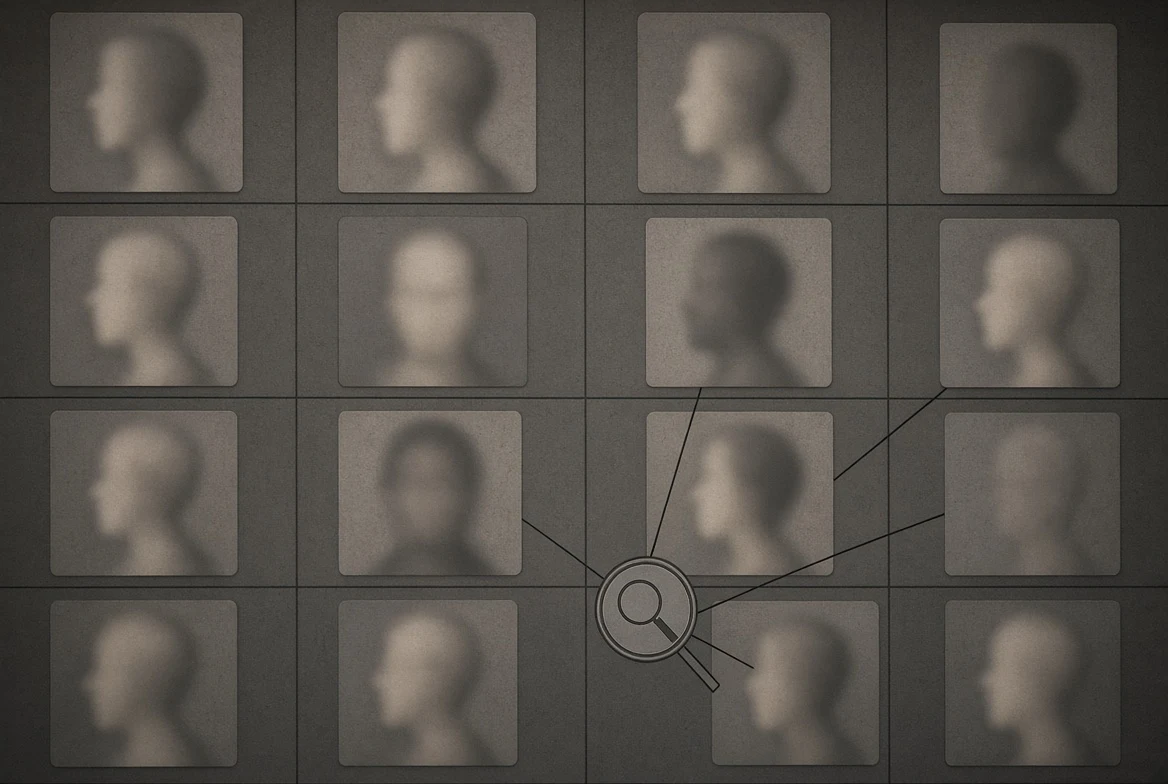
The tools combine object detection with tracking. A detection model locates faces, license plates, badges and sometimes tattoos or screens in each frame; a tracking algorithm links detections across frames so that a face moving through video is masked continuously rather than frame by frame. Audio redaction either flags segments by transcript or lets reviewers select portions to mute. The reviewer reviews the machine's proposals, corrects misses and exports the result with an audit trail of what was altered.
Vendors describe processing speeds in hours of footage per hour of review and report accuracy figures from their own testing. Those claims are vendor claims: as of this writing there is no widely cited, independently published benchmark of face-redaction accuracy across tools, which makes procurement documents, agency pilot evaluations and oversight reports — where they are made public — the main non-marketing evidence available to any reader who wants more than a brochure. Agencies that have described their deployments generally treat the software as a first pass that a human must verify, not a substitute for review.
What happens when redaction goes wrong?
Two failure modes recur in published reporting and litigation records. Under-redaction exposes a face the law required masking, which can violate privacy statutes and, in the worst cases, endanger witnesses or victims. Over-redaction removes material the public was entitled to see, which feeds accusations of cover-up and can itself become the story. Both failures have drawn real scrutiny when released footage circulated and viewers noticed artifacts the review had missed.
Courts add a further check. In discovery, redaction decisions are reviewable, and a party that believes a redaction hides exculpatory material can challenge it; judges can order production of unredacted video for in camera review. The software's output is therefore not the last word in a courtroom, whatever it is in a press release.
| Failure | Consequence | Where it surfaces |
|---|---|---|
| Under-redaction | Privacy violations, harm to bystanders | Released footage, records complaints |
| Over-redaction | Credibility damage, records litigation | Public controversy, court review |
| Tracking loss | Mask flickers or drops mid-frame | Quality review before release |
| Audio mis-labeling | Context distorted by wrong mutes | Transcript comparison, court review |
How do policies govern what gets redacted?
Mature agencies operate from written redaction policies that specify who reviews footage, what categories require masking, how decisions are logged and how a requester can challenge a redaction. The policies translate statutes into operations: a law that protects minors or uninvolved bystanders becomes a checklist the reviewer works through, and a release deadline becomes a staffing plan. Where agencies publish these policies, oversight bodies and journalists can verify that the same rules were applied to a sensitive incident as to a routine one.
The absence of a policy is also legible. Auditors reviewing footage release programs have repeatedly recommended adopting written criteria, tracking redaction hours as a workload statistic and reporting release timeliness publicly. Those recommendations exist because practice varies: two agencies in the same state, subject to the same statute, can publish materially different amounts of footage from comparable incidents, and without published criteria the public has no way to tell policy from improvisation.
Why did agencies adopt automation at all?
Scale. A single critical incident can generate many hours of video from multiple officers, and manual masking runs far slower than real time. Statutory deadlines compound the arithmetic: when release windows are measured in days, an agency without automation either misses deadlines or posts footage with minimal redaction, and both outcomes have drawn criticism. Automation moved the bottleneck from masking frames to reviewing the machine's work.
The economics also explain consolidation: redaction modules are increasingly bundled into the same evidence platforms that store body camera video, so the agency's storage vendor becomes its redaction vendor. Procurement choices made for storage thus shape a jurisdiction's public transparency practice — a linkage rarely debated when the contracts are signed.
What should a reader weigh when released footage has redactions?
Start with the governing rule: the state statute or policy that defines what had to be masked, which tells you whether a given blur was mandatory or discretionary. Then consider the process: agencies that publish their redaction policies, and logs of what was altered, give the public a way to evaluate the result rather than argue about it. The software has made meeting statutory deadlines possible; whether the redactions are right remains, for now, a judgment made by people and checked only after the fact, which is exactly why the written policy matters as much as the tool.