Expungement is a court order erasing or destroying a criminal record so that, in most circumstances, the offense is treated as if it never occurred; record sealing instead hides the record from public view while retaining it for courts and law enforcement. Both mechanisms answer the same problem: a conviction or even an arrest can follow a person through employment, housing, and licensing checks for life, long after any sentence is served.
This article explains the difference between erasing and sealing, who qualifies under the main state approaches, and how automatic clearing laws have changed the picture since 2018. It publishes information, not legal advice; eligibility turns on the specific statute and record, and clearing a record generally requires filing in the court of conviction.
The scale of the problem these laws address is large. Estimates cited by the Justice Department's Bureau of Justice Statistics put the number of U.S. adults with a felony conviction record at roughly 19 million as of 2022 research, and millions more carry arrest records without any conviction. Clearance through the courts, historically, reached only a small share of eligible people — a gap that the automatic-record-clearing movement now targets.
What is the difference between expungement and sealing?
Expungement is the stronger remedy. When a record is expunged, the person can usually answer "no" to questions about arrests or convictions on most employment applications, and the physical or digital record may be destroyed or returned. Sealing is more limited: the record still exists, but it is closed to the public and generally invisible to commercial background-check companies, while courts, prosecutors, and police retain access.
Vocabulary varies by state in ways that confuse even practitioners. Some states use "expungement" to describe what is functionally sealing; others call sealing "setting aside" a conviction. The operative questions are always the same: who can still see the record, and what can the person legally deny. The statute's own words, not its label, decide those questions.
Who qualifies?
Eligibility lines are drawn offense-by-offense and state-by-state, but the pattern is consistent:
- Arrests without conviction are the easiest to clear, and many states mandate sealing once charges are dropped or the person is acquitted.
- Minor and mid-level convictions clear after a waiting period — commonly one to five years for misdemeanors and five to ten for felonies — if the person has completed the sentence and stayed conviction-free.
- Serious violent offenses, sex offenses, and crimes against children are excluded from relief in most states.
- Some states limit felony relief to specific classes: California's relief for most offenses after full sentence completion contrasts with states where most felony convictions are permanently ineligible.
- Federal convictions are the hardest: there is no general federal expungement statute, only narrow set-aside provisions such as those for certain young-offender drug convictions under 18 U.S.C. § 3607 and court-ordered sealing in unusual cases.
Pardons remain the fallback where statutory relief is unavailable. A governor's or board's pardon does not erase the record everywhere, but it restores rights and, in some states, enables a court-ordered expungement afterward.
How do automatic record-clearing laws work?
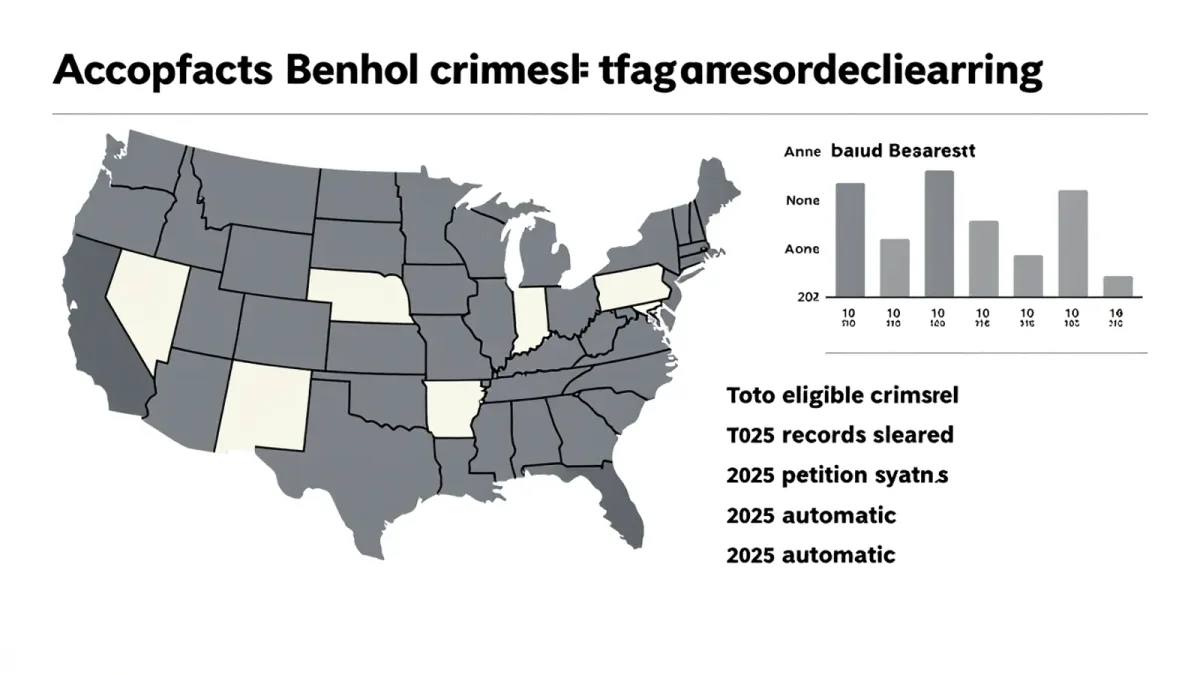
Since Pennsylvania passed the first broad automatic-sealing law in 2018, roughly a dozen states have enacted versions that clear eligible records by government action, without any application. The machinery differs: in some states prosecutors certify eligible cases; in others the state police or courts run periodic sweeps. Utah, Michigan, and California enacted automatic relief covering both arrests and certain convictions, per the National Conference of State Legislatures' tracking.
The results from the early states explain the movement's growth. The Stanford Law School Justice Advocacy Project's research on Pennsylvania's Clean Slate law found that of records sealed automatically in the first year, few recipients had applied manually beforehand — the eligibility was real but unused, exactly the gap automation closes. Research published by the University of Michigan on its state's laws found that people whose records were cleared saw wage and employment gains within a few years, with the strongest gains for cleared misdemeanor records.
What do cleared records still show?
More than most people expect. Immigration authorities, firearms-purchase background checks through the federal system, professional licensing boards in some states, and law enforcement can all see beyond many expungements. A cleared conviction can still count as a prior offense at sentencing in many jurisdictions, and it remains admissible for certain purposes such as impeachment. Federal firearms law treats state expungements unevenly, depending on the statute's language.
Commercial data is a separate problem. Background-check companies and data brokers gather records before they are cleared and may not update promptly; both federal and state law require updated reporting, but enforcement is complaint-driven, and people often must dispute stale listings company by company. Clearing the court record does not automatically clean the secondary market.
How does someone actually get a record cleared?
The procedure is petition-driven in most states: a filing in the sentencing court, fingerprints, a fee — sometimes waivable — and a hearing unless the prosecution objects. Waiting periods run from sentence completion, not conviction, and court supervision must be finished. In petition states, counsel or well-run self-help clinics matter: studies of expungement clinics found many first filings rejected for form errors or wrong venue. In automatic-clearing states, no filing is needed at all, which is precisely their point.
The practical sequence is to obtain the full criminal history from the state repository, check eligibility under the state's statute, and file in the county of conviction. Processing times run from weeks in automatic states to a year or more in busy urban courts.
What does relief cost?
For the person, it should cost little beyond time: most states charge filing fees of tens to a few hundred dollars, with fee waivers on request, and automatic states charge nothing. The real cost has historically been information — knowing relief exists, finding the right form, and surviving the process — which is why legal aid clinics, court self-help centers, and state attorney general guides are the usual starting points. Commercial record-clearing services charge for work most people can do themselves, and the state courts' own published instructions are the safer first stop.