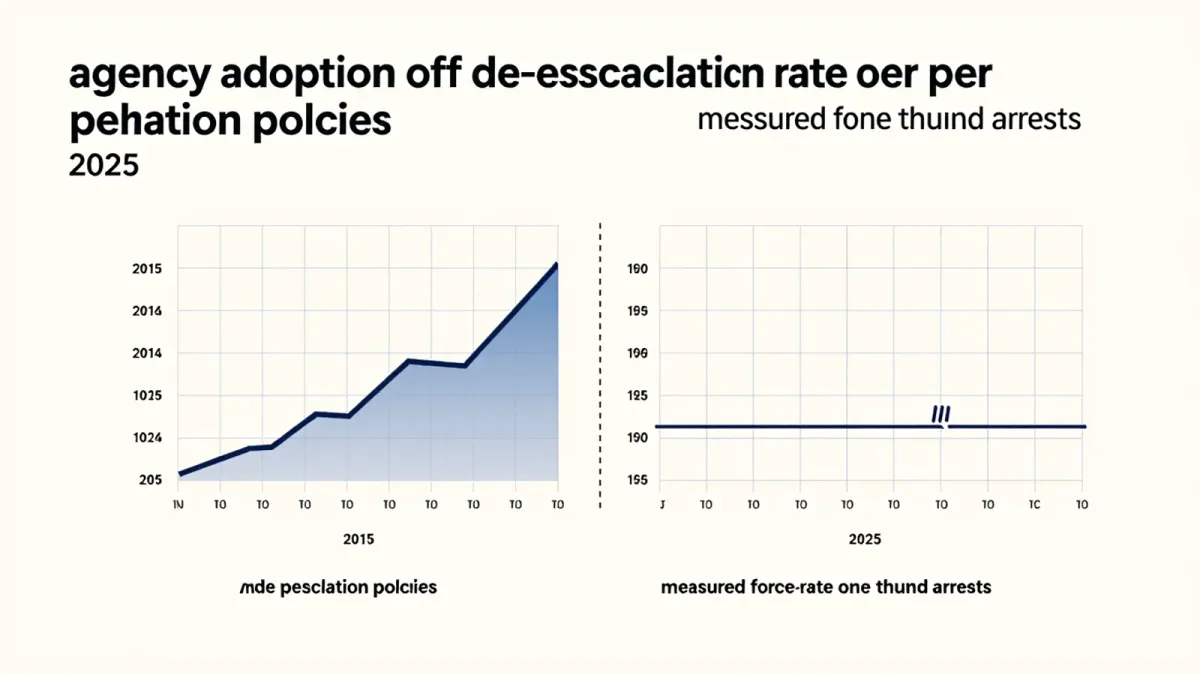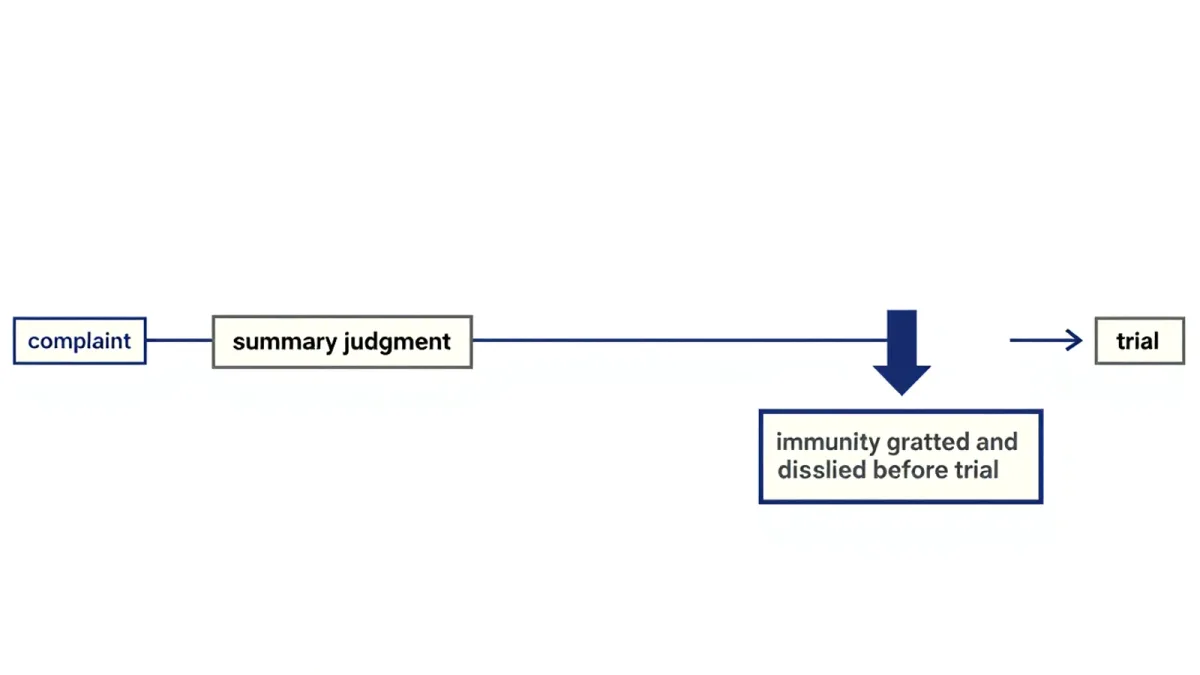
Qualified immunity is a judicial doctrine that protects government officials, including police officers, from being sued for money damages unless they violated a constitutional right that was already clearly established by prior case law. Courts decide the question early, often on paper before trial, and it disposes of the large majority of civil claims against officers: an analysis by Reuters of district court decisions found officers invoked qualified immunity in more than half of excessive-force cases, with courts dismissing the case at summary judgment or beyond in a substantial share of them. The doctrine comes from court decisions, not any statute's text, and both its critics and defenders agree on that much.
This article explains where the doctrine came from, how a court applies it, who actually pays when it fails, and where reform efforts stand. It publishes information, not legal advice.
Where did the doctrine come from?
The legal vehicle is 42 U.S.C. § 1983, an 1871 civil rights statute that lets people sue officials who violate their constitutional rights. The statute's text says nothing about immunity, but the Supreme Court read one into it in a series of cases: Pierson v. Ray in 1967 recognized good-faith immunity for officers, and Harlow v. Fitzgerald in 1982 reshaped the doctrine into its modern form — immunity unless the official violated clearly established law that a reasonable person would have known. The Court's stated purpose was to spare officials the burden of trial and to shield discretion, per the Harlow opinion. Everything contested today — the level of factual specificity required, the two-step analysis — is judicial gloss on that 1982 decision.
How does a court actually apply it?
A § 1983 plaintiff must clear two hurdles. First, the court asks whether the facts, taken in the plaintiff's favor, show a constitutional violation. Second, it asks whether that right was clearly established — meaning existing precedent would have put every reasonable officer on notice that the specific conduct was unlawful. Courts can skip either step. In practice, per the appellate record, the clearly-established step decides most cases: a plaintiff must point to a prior case with closely similar facts, and courts routinely find the precedents too different. Justice Sonia Sotomayor's dissent in Kisela v. Hughes, a 2018 case where the Court granted immunity to an officer who shot a woman holding a knife, described the doctrine as permitting officers to shoot first and cite precedent later — an dissent, attributed as such, that reform advocates quote frequently.
| Milestone | Year | What it established |
|---|---|---|
| Pierson v. Ray | 1967 | Good-faith immunity recognized for police under § 1983 |
| Harlow v. Fitzgerald | 1982 | Objective clearly-established standard replaces subjective good faith |
| Kisela v. Hughes | 2018 | Immunity granted despite Sotomayor dissent calling the panel's error stark |
| Justice Thomas statement denying cert | 2017 | Called the doctrine simply an invitation to litigation, per his written statement |
| Cert denials, 2020 | 2020 | Court declined multiple invitations to reconsider the doctrine |
Why does the two-step analysis matter so much?
Because step order shapes what the public ever learns. When a court grants immunity at the first stage or the second, the case typically ends without discovery — no depositions of officers, no production of internal records, no cross-examination. Scholars on both sides of the reform debate acknowledge this discovery shield as the doctrine's most concrete practical effect, per law review treatments of the question. Plaintiffs who lose on immunity also lose the facts their suit would have generated, which means patterns that a civil docket might otherwise expose — repeated force by one officer, or policy failures inside one department — stay inside the agency. That is why some reformers propose keeping immunity for officers while ending it early in litigation: the fight is often less about damages than about when the case is allowed to be examined.
Who pays when an officer loses?
Almost never the officer personally, per the leading empirical work. Joanna Schwartz's research, published in the UCLA Law Review and summarized in her book, examined thousands of cases and found governments indemnified officers in the overwhelming majority of settlements and judgments — she calculated that officers paid about 0.02 percent of the dollars awarded in her sample. Governments also typically pay the defense costs, per her findings. That empirical record reframes the debate: qualified immunity's practical protection, critics note, is not officers' pocketbooks but the public's — and the doctrine's early termination of cases, which shields departments from discovery and juries. Defenders respond that the doctrine protects decisions made under pressure, per briefs filed by police organizations in the cert petitions.
What did the reform push of 2020 change?
The killing of George Floyd made qualified immunity a legislative target. The George Floyd Justice in Policing Act, which passed the House in 2021, contained a provision abolishing the doctrine as a defense in civil suits; it stalled in the Senate and never became law, per congressional records. States acted where Congress did not: Colorado's 2020 law created a state-law civil claim that overrides qualified immunity as a state defense, and New Mexico and a few others adopted similar frameworks, per legislative records. The result is a split system — federal claims remain governed by the doctrine, while a growing set of state claims are not. Municipal insurers and city attorneys, per their public comments, track the state laws closely because that is where liability now concentrates.
Where does the Supreme Court stand?
The Court has repeatedly declined to reconsider. In 2020 it denied a series of certiorari petitions asking it to revisit or abolish the doctrine, and in 2017 Justice Clarence Thomas, in a statement accompanying a denial, wrote that the modern doctrine appears incompatible with the statute's text, per his published statement. Justice Sotomayor has criticized its application in dissents. Neither justice has attracted a majority; the doctrine stands as of the 2025-26 term, with the Court continuing to grant immunity in a significant share of summary dispositions, per appellate researchers' counts.
What should a reader conclude about the doctrine's effect?
The measurable effects are procedural and documented: cases end earlier, discovery is narrower, and the factual record in many police misconduct suits is thinner than it would be at trial. Whether the doctrine shields bad decisions or reasonable ones is a normative fight the courts have not ended. What the record supports is narrower: the doctrine is judge-made, it decides most cases on paper, officers rarely pay judgments, and the reform action since 2020 has moved to state legislatures, where several states have already built the alternative the federal debate only discusses.