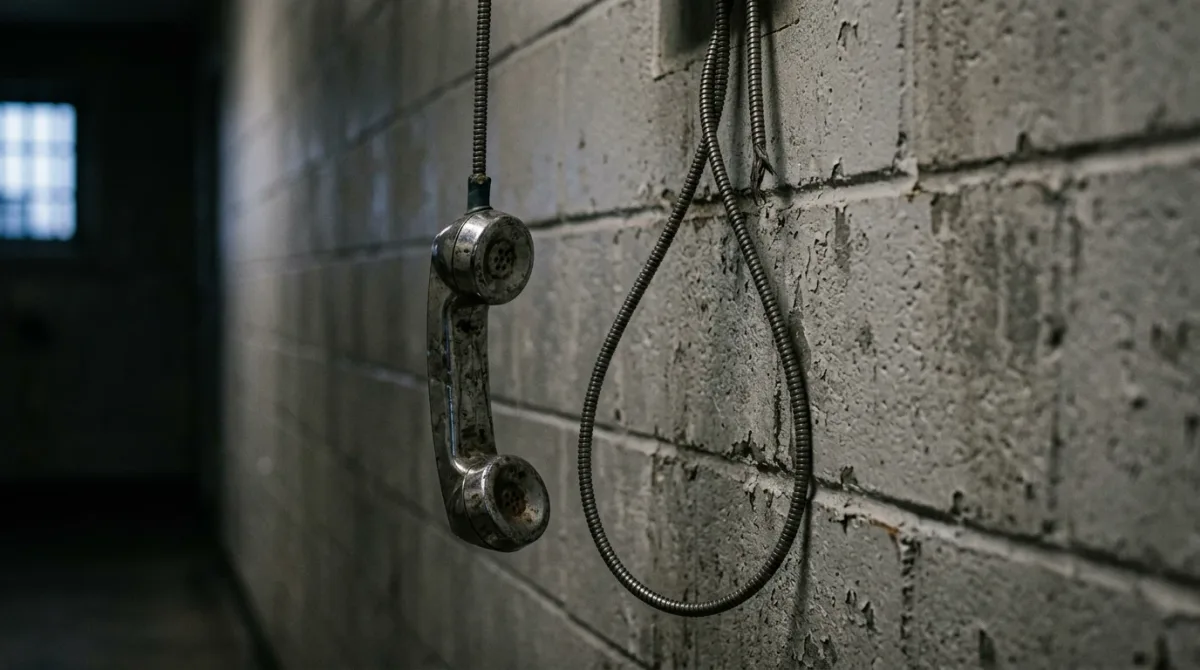
The Federal Communications Commission has not delivered the phone-rate cuts it promised incarcerated people and their families in 2024. After a July 2025 delay pushed compliance with the original rate caps to April 2027, the commission voted Oct. 28, 2025, to replace those caps with new, higher interim rates — a shift Senate Democrats say could raise some families' bills by up to 83 percent compared with the 2024 rule.
What did the Martha Wright-Reed Act actually require?
The Martha Wright-Reed Just and Reasonable Communications Act, signed into law in early 2023 and named for a retired nurse who fought the cost of calling her incarcerated grandson, closed a gap in the FCC's authority. The commission had long been able to cap the cost of interstate prison and jail calls, but a 2017 federal appeals court ruling stripped it of power over in-state calls — the calls most incarcerated people actually make. The 2023 law restored and expanded that authority, letting the FCC regulate both audio and video call rates nationwide and eliminate "site commissions," the per-minute kickbacks telecom vendors pay sheriffs and prison systems to win exclusive contracts, according to NPR's coverage of the bill signing.
Before the law, a 30-minute call from prison cost roughly $5 on average, with wide variation by state and facility, NPR reported, citing the exclusive-contract system and commission payments as the two main cost drivers. Advocates for incarcerated people have long argued that regular phone contact reduces recidivism, making the price of a call a public-safety question as well as a family one.
What rate caps did the FCC set in 2024, and why were they delayed?
Acting on the new law, the FCC issued a Report and Order in 2024 setting phased-in caps intended to roughly halve typical audio rates and, for the first time, cap video call rates and bar site commissions outright. According to an analysis by the Prison Policy Initiative, an advocacy group that tracks correctional telecom pricing, the 2024 order would have brought per-minute audio rates down from a range of roughly $0.14 to $0.21 to a range of roughly $0.06 to $0.12, with video capped between about $0.11 and $0.25 per minute depending on facility size — figures the group says have not been disputed by the commission's own record.
Those caps were due to begin phasing in starting Jan. 1, 2025. In July 2025, under Chairman Brendan Carr, the FCC delayed compliance to April 1, 2027, citing what the commission called "negative, unintended consequences," including warnings from sheriffs that they might cut phone access entirely rather than lose commission revenue, and complaints from telecom vendors that they could not absorb the cost of call monitoring at the new rates, the Prison Policy Initiative's tracking of the docket shows. Twenty-plus Republican state attorneys general had also sued, arguing the original rules could hamper criminal investigations that rely on monitored jail calls.
What changed with the FCC's October 2025 order?
Rather than simply delaying the 2024 caps, the FCC's Oct. 28, 2025, Report and Order, Order on Reconsideration, and Further Notice of Proposed Rulemaking (FCC 25-75) replaced them with a new, higher set of interim rate caps, according to the commission's own fact sheet on the order. The agency said it revised its cost methodology after finding the 2024 rates had led to reduced safety-monitoring services and, at some small jails, discontinuation of calling services altogether.
The revised interim caps vary by facility type and size, measured by average daily population (ADP):
| Facility tier | Audio, per minute | Video, per minute |
|---|---|---|
| Prisons | $0.09 | $0.21 |
| Large jails (1,000+ ADP) | $0.08 | $0.16 |
| Medium jails (350–999 ADP) | $0.09 | $0.16 |
| Small jails (100–349 ADP) | $0.10 | $0.17 |
| Very small jails (50–99 ADP) | $0.12 | $0.22 |
| Extremely small jails (0–49 ADP) | $0.16 | $0.39 |
The order also created a new "extremely small jail" tier for facilities with fewer than 50 people in custody on average, and added a uniform $0.02-per-minute facility additive across every tier — a mechanism meant to let correctional facilities recover costs of providing calling access, replacing the reimbursement approach used in the 2024 order, per the fact sheet.
How much more will families pay under the new rates?
In a letter opposing the order, a group of Senate Democrats led by Sen. Tammy Duckworth of Illinois — joined by Sens. Maria Cantwell, Chuck Schumer, Amy Klobuchar and Elizabeth Warren, among others — wrote that the FCC's revised rates would increase fees by up to 83 percent compared with the 2024 rule, according to coverage on Duckworth's Senate website. The letter called the commission's stated justification for the change — that the 2024 rule produced "unintended consequences" — unsupported by the rulemaking record, and characterized the delay and rate increase as "arbitrary and capricious." FCC Commissioner Anna Gomez dissented from the October order, arguing it shields "a broken system that inflates costs and rewards kickbacks," per the Prison Policy Initiative's account of the vote.
The commission has not, in its public order materials, offered its own dollar comparison to the 2024 caps; its stated rationale centers on facility-level safety and service-continuity concerns rather than a family-cost estimate.
Are the old bans on extra fees still in place?
Yes. The October 2025 order kept the 2024 ban on site commissions and on most ancillary service charges, according to the FCC fact sheet, though the commission is separately seeking comment on whether to reinstate caps — rather than outright prohibitions — on automated payment fees and third-party financial transaction fees, which had previously been limited to $3 and $5.95 per transaction, respectively, per the Federal Register notice of the order.
When do the new rates take effect, and what happens next?
The revised interim caps became effective upon the order's publication in the Federal Register, with compliance required 120 days after that publication, according to the FCC fact sheet. The order was published in the Federal Register on Dec. 5, 2025, which set a compliance deadline in early April 2026 — a date that, as of this writing, has already passed, meaning the interim caps listed above should now be in effect at most covered facilities.
The interim caps are not final. The same order opened a Further Notice of Proposed Rulemaking seeking public comment on permanent rate caps, with initial comments due Jan. 5, 2026, and reply comments due Feb. 3, 2026, according to the Federal Register notice. The commission said it wants more data on video-calling market costs and facility-reported security expenses before locking in permanent numbers — meaning the rates in the table above could still change again once that docket closes.
FAQ
Did the FCC cancel the Martha Wright-Reed Act's rate caps entirely?
No. The FCC still caps both audio and video call rates under the law; it revised the numbers upward from the 2024 order and delayed the original phase-in, but it has not eliminated the rate-cap requirement or the ban on site commissions.
Do the new rate caps apply to every jail and prison?
The caps apply to facilities covered under the FCC's Incarcerated People's Communications Services rules, tiered by facility type and average daily population, as shown in the table above; the commission's fact sheet does not describe any facility category as exempt from the interim caps.
Is the $0.02-per-minute additive charged on top of the listed rates?
Yes. The FCC fact sheet describes it as a uniform facility-cost recovery charge added across all audio and video tiers, separate from the per-minute rate caps in the table.
For a related rights news perspective, read How the FCC sets price caps on prison phone calls.
For more context, read Remarks as Prepared for Delivery by Dr. Liz Sherwood-Randall for the Eradicate Hate Global Summit | Pittsburgh, PA.
For more context, read jones.
For more context, read vessel.